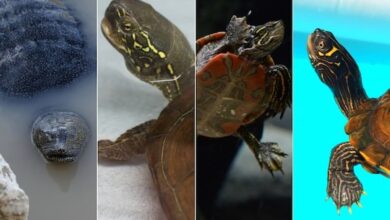
Sideneck turtles are the wider family that includes the snake-necks Priya covered separately — but the broader Pleurodira suborder contains a handful of species in the pet trade that share a defining feature: they retract their necks sideways under the shell rather than pulling them straight back. African helmeted turtles, South American sidenecks, the mata mata. Priya keeps two species and finds them more rewarding than any Cryptodira she’s owned.
This guide covers sideneck husbandry generally, with notes on the specific species you’re most likely to encounter.
Species in the trade
The most commonly-kept sidenecks:
- African helmeted turtle (Pelomedusa subrufa) — widespread in sub-Saharan Africa. Hardy, tolerant of variable conditions. Adults 15–30 cm.
- Yellow-spotted Amazon River turtle (Podocnemis unifilis) — striking yellow head markings, native to Amazon basin. Adults 30–45 cm.
- Twist-necked turtle (Platemys platycephala) — small, flat-shelled, South America. Adults 15–18 cm.
- Big-headed Amazon River turtle (Peltocephalus dumeriliana) — rare in trade, large (40–50 cm).
- Hilaire’s sideneck (Phrynops hilarii) — South America, 20–40 cm depending on subspecies.
For more on the closely-related snake-necks (which are technically also sidenecks), see our snake-neck turtle care guide. The mata mata gets its own dedicated coverage at our mata mata page.
This guide focuses on the African helmeted as the most commonly-encountered species, with notes on the others.
Adult size and basic biology
Sideneck adult sizes vary substantially by species — from the 15 cm twist-necked to the 50 cm big-headed Amazon. Tank size needs to match. The African helmeted (Pelomedusa) reaches 15–30 cm in adults with females larger; we’ll use this as the reference for setup recommendations and note where larger species require scaled-up housing.
Tank size
- Adult African helmeted: 150–250 litres (40–65 US gallons) depending on adult size.
- Adult yellow-spotted Amazon: 400+ litres (100+ US gallons). Outdoor pond preferable for adults.
- Twist-necked: 100–150 litres — the small size makes them suitable for small-tank setups.
- Big-headed Amazon: outdoor pond essentially required. 800+ litres if indoor.
Long footprint over tall narrow tanks. Sidenecks are weak swimmers compared with sliders; tall tanks with limited bottom area produce stressed animals.
Water
Most sidenecks are tropical or sub-tropical species and want warmer water than temperate-zone aquatic turtles:
- Water temperature: 24–28 °C for tropical species. African helmeted tolerates a wider range (20–28 °C).
- Water depth: 2–2.5× shell length. Most sidenecks aren’t deep-water specialists.
- Filtration: rated 2× tank volume.
- Water changes: 25 % weekly.
- pH: 6.5–7.5; African species sometimes prefer slightly more alkaline (7.0–7.5).
- Hardness: moderate. South American species naturally inhabit soft, slightly acidic water; matching this helps.
Basking
Sidenecks bask less than sliders. Some species (particularly twist-necked and African helmeted) rarely use basking platforms at all. Still provide the option:
- Platform: medium-sized, ramped, easy access.
- Basking temperature: 30–33 °C if the species uses it.
- UVB tube: required regardless of basking frequency — UVB exposure through water still helps. Reptile-grade 5.0 or 10.0 spanning the tank.
- Photoperiod: 10–12 hours.
Substrate and decor
Many sidenecks burrow or seek bottom-cover. The setup that works best:
- Fine sand — pool-filter sand 3–5 cm deep. Sidenecks burrow partially and forage along the bottom.
- Driftwood — multiple pieces. Particularly important for tank-shy species; provides cover and resting spots.
- Live plants — anubias, java fern. Most sidenecks don’t eat live plants enthusiastically.
- Hiding spots — large rock overhangs, PVC tubing, cave decorations. Twist-necked turtles in particular spend most of the day hidden.
- Leaf litter for South American species — dried oak or beech leaves on parts of the substrate mimics natural conditions and tannins the water slightly.
Diet
Sidenecks are mostly carnivorous, with subtle differences by species:
- African helmeted: opportunistic omnivore. Eats anything from earthworms to small frogs to soft fruit. The least fussy sideneck.
- Yellow-spotted Amazon: mainly fish and aquatic invertebrates as juveniles, shifting toward fruit and aquatic plants as adults. The most plant-keen sideneck.
- Twist-necked: small live prey — insects, worms, snails. Refuses pellets in our experience.
- Hilaire’s sideneck: carnivorous — fish, mussel, shrimp, the occasional pinky.
General feeding pattern across the group:
- Hatchlings (daily): small live prey — bloodworms, chopped earthworm. Many sidenecks ignore frozen food initially.
- Juveniles (every other day): earthworms, krill, mussel, small feeder fish (gut-loaded, parasite-free), pellets for species that accept them.
- Adults (every 2–3 days): nightcrawlers, mussel, raw shrimp, pellets, plus species-specific items (fruit for yellow-spotted Amazons, small frogs for big-headed Amazons).
Calcium twice a week, multivitamin weekly with retinol.
Behaviour
Most sidenecks are calmer and less “displaying” than Cryptodira species. They sit quietly, forage methodically, and don’t come to the front of the tank for food the way sliders do.
Defensive behaviour: when threatened, sidenecks pull the head sideways under the shell lip, leaving the long neck exposed alongside the body. They’ll musk (foul-smelling secretion) more readily than most aquatic species. Don’t handle for fun.
Single-keeping is the default. Some species (African helmeted) tolerate same-sex pairs in adequate space; others (twist-necked, big-headed Amazon) are strongly solitary. Mixed-sex pairs will breed but require seasonal cooling triggers.
Health red flags
- Respiratory infection — cold water is the usual cause. Sidenecks from tropical ranges are particularly sensitive.
- Shell rot — water quality issues. Sidenecks in under-filtered tanks develop it within months.
- Vitamin A deficiency — common in species fed exclusively on protein. Multivitamin discipline matters.
- Refusal to eat after a move — sidenecks are shyer than sliders. Give 5–10 days before worrying.
- Skin parasites (leeches, mites) — sometimes carried over from wild-caught animals. Captive-bred is the safer source.
Full triage in Turtle Health & Feeding Guide.
Lifespan
Most sidenecks live 25–40 years in captivity. The big-headed Amazon may reach 50+.
Legal status
Variable by species and jurisdiction. Yellow-spotted Amazon turtles are CITES Appendix II; possession requires Article 10 paperwork in the EU. African helmeted turtles are not CITES-listed and can be kept legally in most jurisdictions.
Always buy captive-bred and ask for paperwork. South American species in particular face heavy wild-collection pressure.
Buying advice
- Captive-bred only. Wild imports of South American species are common and often arrive sick or parasite-laden.
- Hatchling prices vary widely: African helmeted US$50–150; yellow-spotted Amazon US$200–500; rarer species higher.
- Ask which species. “Sideneck” in the trade can mean almost anything. Get the scientific name.
- Check the shell and skin. Sidenecks show health issues earlier than most species.
- Watch the animal feed. Reluctance to feed in front of a stranger is normal; total refusal is concerning.
Related on Turtle Times
- Sideneck Turtle species overview — the family-wide identification guide.
- Snake-necked turtle care — the closest related group.
- Mata Mata Turtle — the most distinctive sideneck.
- Care Sheets & Information — enclosure hub.
- Turtle Health & Feeding Guide — diet and medical companion.
— Priya, Turtle Times. Got a sideneck question or trying to identify your animal? The contact form reaches my inbox — flag “sideneck” in the subject.
Got a question we haven’t answered?
The Turtle Times team answers reader questions every week. Drop us a note — Linda covers health, Priya handles softshells and side-necks, Tom takes aquatic species, Marcus covers tortoises, Jenna runs new-owner triage.