Welcome to our master care index. We built this page back in 2020 as a shortcut to every species and habitat guide we publish at Turtle Times — and after five years of reader emails, we’ve rewritten it from scratch as the proper starting point we wish we’d had when we first picked up a shell.
If you’ve just brought a turtle or tortoise home, start here. If you’ve had your animal for years and want to double-check something specific, the navigation below jumps you straight to the section you need.
What this care index covers
Turtles and tortoises sit under one biological order, Testudines, but the husbandry split between aquatic species (in water most of the day) and terrestrial tortoises (almost never in water) is huge. The two camps want different temperatures, different food, different humidity and very different enclosures. We’ll keep flagging which group each section applies to.
Throughout this guide, when we say “our team” we mean the small group of long-term keepers who write here — Tom (12 years with aquatic sliders and cooters), Linda (veterinary-tech background, the one who answers most of the health questions), Marcus (sulcata and Hermann’s tortoise outdoor pens), Priya (softshells and sidenecks) and Jenna (the new-owner email triage). We sign off our individual posts so you know whose experience you’re reading.
1. Before the animal arrives
The single biggest mistake we see in the inbox is the “impulse aquarium” — somebody buys a hatchling slider at a pet shop, brings it home in a tiny plastic critter-keeper, and then realises three months later they need a 75-gallon tank, a basking lamp, a UVB tube and a canister filter rated above the volume of the tank. Get the habitat right first, then bring the turtle home.
Our New Turtle Owners page is a full pre-arrival checklist, but the short version is:
- Adult enclosure size, not hatchling size. A red-eared slider that fits in your palm at six weeks will reach 25–30 cm of shell within four years. The rule of thumb is 10 US gallons of swim space per 2.5 cm of shell length.
- UVB tube. Reptile-grade UVB output (5.0 or 10.0 depending on species) is the difference between a turtle that grows a properly mineralised shell and one that develops metabolic bone disease. Compact CFL bulbs are a poor substitute.
- Basking lamp and thermometer. A digital probe thermometer at the basking spot beats guessing. Most aquatic species want 32–35 °C on the basking platform and 24–27 °C in the water.
- Filter rated above your tank volume. Turtles produce a lot of waste compared with fish. We always go one step up — a 200-litre tank gets a filter rated for 300+ litres.
- A vet you can phone. Find a reptile-experienced exotics vet before you need one. The first time you spot the early signs of shell rot or respiratory infection is not the day to start ringing around.
2. Picking the right species for your situation
We’re going to be honest: the species most commonly sold — the red-eared slider — is also one of the worst impulse picks. Sliders get big, they live 30+ years, they need substantial filtration, and they’re an invasive species across most of the world so re-homing options are limited. There are better starter turtles.
Our full species roundup lives at Turtle & Tortoise Breeds, but here are the situations we hear most often and what we usually suggest:
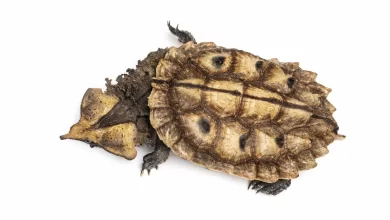
- Small tank, want an aquatic turtle — consider a musk turtle (Sternotherus odoratus) or a mud turtle. They stay under 12 cm and don’t bask as obsessively as sliders, so smaller setups work.
- Want a tortoise for a UK / cool-climate garden — Hermann’s or Russian tortoises are hardy and far easier than sulcatas, which need year-round warmth and end up bigger than most people expect.
- Want a striking aquatic display — a single painted turtle is a beautiful option and stays at a manageable size.
- Have kids who want to handle the animal often — honestly, none. Turtles and tortoises are observation pets, not handling pets. Consider a different reptile or a small mammal if handling is the priority.
3. Enclosure setup — aquatic species
An aquatic turtle’s home is essentially a heavily-filtered swimming pool with a heated, UVB-lit dry spot above the water. The dry spot needs to be big enough for the turtle to climb fully out and dry off, with no risk of slipping back into the water.
We cover this in depth in our enclosures hub. Key dimensions to aim at, by adult species size:
- Small species (musk, mud) — 75–100 litres / 20–30 US gallons.
- Medium (painted, map, spotted) — 150–250 litres.
- Large (sliders, cooters) — 300+ litres, ideally a stock tank or pond setup.
Substrate is contentious. We keep ours bare-bottom in indoor tanks because it’s easier to clean and easier to spot waste. Some keepers prefer river rocks (too big to be swallowed) for aesthetics. Avoid small gravel — we’ve seen the X-rays of turtles who’ve eaten enough of it to require surgery.
4. Enclosure setup — tortoises
Tortoises want floor space rather than tank volume, and most species benefit hugely from outdoor time when the weather allows. A wooden tortoise table is a far better indoor option than an aquarium — the open top lets heat and humidity escape, which is closer to natural conditions for most temperate species.
The most-asked tortoise question in our inbox is about substrate. For Mediterranean species (Hermann’s, Greek, Russian) we use a soil + play-sand mix that holds a burrow shape. For tropical species (red-foot, yellow-foot) we use cypress mulch or coco coir kept lightly damp. Never use cedar or pine shavings.
5. Diet, by group
Our food category goes deeper, but the broad rules are:
- Aquatic turtles — omnivorous, but the protein/plant ratio shifts as they age. Hatchlings want roughly 70 % protein (pellets, bloodworms, the occasional feeder fish), adults shift towards 60 % plants (collard greens, dandelion leaves, romaine — never iceberg).
- Mediterranean tortoises — weeds and leafy greens, with a low-protein, high-fibre approach. No fruit beyond the occasional treat. Calcium dust two or three times a week, multivitamin once a week.
- Tropical tortoises — the only group that wants fruit regularly — mango, papaya, melon — alongside greens and a smaller protein component.
If you’re ever in doubt, the rule that’s served us well: feed a wider variety than feels necessary. Monodiet is where most nutritional deficiencies start.
6. Health red flags
The signs that should get you booking a vet appointment within 24 hours, not waiting a week:
- Wheezing, bubbling at the nostrils, or open-mouth breathing (respiratory infection).
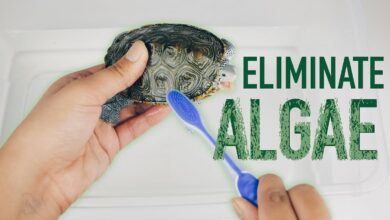
- White or grey patches on the shell that don’t scrub off (shell rot — we cover treatment in the medical issues category).
- Sunken or closed eyes for more than a few hours (vitamin A deficiency, dehydration, or worse).
- Refusal to eat for more than a week in an otherwise warm setup.
- Lethargy combined with floating lopsided in water — possible respiratory infection or buoyancy issue.
Linda’s rule from her vet-tech days: by the time a reptile looks sick to a layperson, it’s usually been sick for a while. Don’t wait.
7. Reader questions we answer often
Some of the recurring ones, with links to our full write-ups:
- Can I keep different species of turtle together?
- Will UVA/UVB go through a thick glass window?
- What substrate should I use for a box turtle?
- My hatchling isn’t eating — what now?
For deeper medical-issue triage and species-specific feeding plans, see our dedicated Turtle Health & Feeding Guide — the medical and dietary companion to this care index.
Further reading off-site
Two non-commercial sources we point readers to when they need more than a single article: the British Chelonia Group (excellent species-specific veterinary resources) and the Tortoise Trust (decades of accumulated husbandry research, freely available).
Wrap-up
If you take one thing from this page, take this: the cost of doing turtle keeping properly — correct enclosure size, correct lighting, varied diet, vet on speed-dial — is much lower than the cost of doing it badly and ending up with a sick animal. Get the basics right the first month and almost every other problem becomes manageable.
— Tom, on behalf of the Turtle Times team. Spotted something out of date? Drop us an email via our Contact page — we re-read this index every quarter.
Got a question we haven’t answered?
The Turtle Times team answers reader questions every week. Drop us a note — Linda covers health, Priya handles softshells and side-necks, Tom takes aquatic species, Marcus covers tortoises, Jenna runs new-owner triage.
Ask the team → Browse the Q&A archive