Map turtles are the species we recommend to keepers who’ve outgrown the “just keep a slider” phase and want something prettier, fussier, and more interesting to watch. Tom’s kept a single Mississippi map turtle (Graptemys pseudogeographica) for nine years, and Linda’s answered enough “why does my map have spots” emails to write this in her sleep.
The short version: map turtles need cleaner water than sliders, slightly cooler basking, and serious filtration. Get those right and they’re among the most rewarding aquatic turtles you can own.
Which species are we talking about?
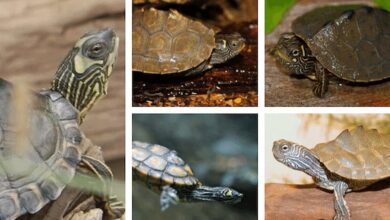
Graptemys is a genus of 14 species, all native to rivers and lakes of central and eastern North America. The most common in the pet trade:
- Mississippi map turtle (G. pseudogeographica kohnii) — the most-kept. Hardy, good first map.
- Northern false map (G. pseudogeographica pseudogeographica) — similar, slightly larger.
- Ouachita map turtle (G. ouachitensis) — striking yellow markings, slightly fussier.
- Black-knobbed map (G. nigrinoda) — smaller, dramatic shell keel.
- Texas map (G. versa) — one of the smallest, manageable in 200 litres.
Several other Graptemys species are endangered or near-endangered in the wild and are not sold legitimately in the pet trade. If you’re offered one, ask for CITES paperwork.
Adult size and sexual dimorphism
Maps have dramatic sex-based size differences. This catches new keepers off guard:
- Males: mature at 9–12 cm of shell length. Compact, manageable, generally peaceful.
- Females: mature at 20–28 cm. More than twice the mass of males, with broader heads and stronger jaws (they’re snail-specialists in the wild).
If you’re buying a hatchling, you may not know the sex for 3–5 years. Plan tank capacity for an adult female to be safe.
Tank size
- Male: 150–200 litres (40–55 US gallons) minimum. They’re active swimmers; longer footprint matters more than depth.
- Female: 280–400 litres (75–110 US gallons). Outdoor pond is an option in temperate climates.
- Pair (one of each): 400+ litres. Be ready for breeding and possible aggression in tight quarters.
A taller tank suits maps better than a shallow long one — they use water depth more than musks do.
Water — the species-specific point
This is the single biggest differentiator from slider husbandry: map turtles need cleaner water. In the wild they live in flowing rivers; in captivity they’re prone to shell rot and skin problems in still or under-filtered water.
- Water depth: at least 3× shell length. Maps are strong swimmers and use the water column.
- Water temperature: 22–26 °C. Hatchlings warmer (25–26), adults cooler (22–24).
- Filtration: rated for 3× tank volume. For a 280-litre tank, plan on 800–1000 lph of filter throughput. Canister filters strongly preferred.
- Flow: maps appreciate moderate current. A canister return aimed across the long axis of the tank gives them what they want.
- Water changes: 25 % weekly minimum. Skip a few weeks of changes and you’ll see white shell patches.
Basking
- Platform: generous — at least 1.5× shell length, ideally bigger. Maps are nervous baskers and will dive at the slightest noise; a roomy platform encourages them to use it.
- Basking temperature: 30–32 °C at the platform surface. Maps don’t want it as hot as sliders; too high and they’ll abandon the platform.
- UVB: reptile-grade 10.0 tube (maps benefit from the higher end). Replace every 12 months. Within 25 cm of the platform.
- Basking lamp: 50–75 W flood. Halogen works; CFL doesn’t.
The nervous basker behaviour is normal. If you can’t get them to use the platform, check temperature (too hot drives them off), visibility (move the tank away from high-traffic areas), and platform stability (a wobbly platform won’t be used).
Substrate and decor
Maps are visual hunters and don’t dig the way musks do. Decor options:
- Bare-bottom or large smooth river rocks — our preferred. Easy to keep clean.
- Pool-filter sand — acceptable if you want a planted look. Maps won’t actively burrow.
- Driftwood — multiple pieces, including some breaking the surface for additional climbing options.
- Live plants — anacharis, anubias, java fern. Maps will graze on softer plants when adult.
Diet
Maps are omnivores with strong protein preference as juveniles and a shift towards plants and snails in adulthood.
- Hatchlings (daily): 80 % protein — bloodworms, chopped earthworm, krill, hatchling pellets. Small portions of duckweed.
- Juveniles (every other day): 60 % protein, 40 % plants. Earthworms, snails (great for the calcium), commercial pellets, leafy greens.
- Adult females: 50/50 protein-plant. Females’ powerful jaws are evolved for crushing snails — feed them whole pond snails or ramshorns regularly.
- Adult males: 60 % protein, 40 % plants — males stay smaller and don’t crush snails as readily.
Calcium dust two to three times a week. Multivitamin weekly. Cuttlebone in the tank as a free-choice option.
One species-specific note: maps that get too little vegetable matter can develop fatty-liver issues. Even if your map ignores greens initially, keep offering them — anacharis growing in the tank is the easiest way to ensure plant intake.
Behaviour
Maps are the most nervous turtles in the common pet trade. Quick movement near the tank, sudden lights, or loud sounds will send them diving for cover. Tank placement matters — out of high-traffic areas, away from the TV.
They’re also among the most beautiful aquatic turtles when they trust their setup. The shell pattern (the “map” of contour lines that gives them their name) and the yellow/orange head and limb markings are striking.
Single-keeping is fine. Pairs work if the tank is large; never house multiple males together — they fight.
Health red flags
- White shell patches — shell rot, the most common map turtle issue. Almost always water-quality related. Triage in our Nolvasan post.
- Skin shedding excessively or sloughing in big sheets — usually a water-quality or temperature problem, occasionally a fungal infection.
- Floating lopsided — respiratory infection. Maps are particularly sensitive to under-temperature basking.
- Refusal to bask — check temperature first (too hot drives them off), then placement (too exposed), then UVB age.
Full triage in our Turtle Health & Feeding Guide.
Lifespan
Captive map turtles regularly live 30–50 years. Females live longer than males on average. Long-term commitment, like all aquatic turtles.
Buying advice
- Captive-bred only. Wild-caught maps are common in some markets and arrive sick. Ask for breeder info.
- Hatchling prices: US$40–120 depending on species and pattern intensity. Ouachitas and rarer species at the top end.
- Inspect shell carefully. Maps show shell rot earlier than other species and the white patches are easy to miss on a young animal.
- Watch it swim. A healthy map is an active swimmer; a floater or sluggish animal is sick.
- If you’re in the US: several Graptemys species are state-protected. Check your state’s wildlife regulations before buying or moving across state lines.
Indoor vs outdoor housing
Maps thrive outdoors in climates that don’t freeze through winter. If you have space for a small pond (3–5 m² surface area, 80 cm depth, predator mesh), an adult female map will use it better than any indoor tank. The natural sunlight does what no UVB tube can match, and the cooler night-time temperatures match their wild rhythm.
Indoor keepers should aim to mimic the conditions: long footprint, moderate water flow, generous basking platform, plenty of cover, and meticulous water-quality maintenance. The species’ reputation for being “fussy” is almost entirely a water-quality story. Get filtration right and they’re no harder than a slider.
Breeding notes
Map turtles will breed in captivity given a pair, adequate space, and a brumation period (cooling the water to 12–15 °C for 8–10 weeks in late autumn through winter). Females require a soft-substrate nesting area — usually a separate container of damp sand they can dig in — or they’ll become egg-bound.
Map turtle eggs are temperature-sex-determined: incubating at 25–26 °C produces males, 30–32 °C produces females. This is a real consideration for keepers planning a breeding project.
Map turtle myths worth dispelling
- “Maps are too hard for beginners.” Half-true. They’re harder than musks but no harder than sliders if you start with the right tank and filtration.
- “Maps don’t bask.” False. They bask plenty when they feel safe. Nervous baskers, but committed ones.
- “Maps need flowing water.” Half-true. They benefit from moderate flow but don’t require river-current speeds. A standard canister return is enough.
- “Maps and sliders mix fine.” False. The slider will out-compete the map at feeding and bullying makes the map nervous baskers worse. Keep species apart.
Related on Turtle Times
- Map Turtle species overview — full natural history and identification.
- Care Sheets & Information — enclosure hub.
- Turtle Health & Feeding Guide — medical and dietary companion.
- Turtle & Tortoise Care Index — full husbandry framework.
- Where to buy turtles ethically — vetted seller recommendations.
— Tom, Turtle Times. Got a map turtle setup question or shell-rot photos? Contact form — flag “map turtle” in the subject line.
Got a question we haven’t answered?
The Turtle Times team answers reader questions every week. Drop us a note — Linda covers health, Priya handles softshells and side-necks, Tom takes aquatic species, Marcus covers tortoises, Jenna runs new-owner triage.