The Reeves turtle (Mauremys reevesii) is the species we recommend most often to UK and European keepers who want a small aquatic turtle — sliders and cooters are restricted under EU invasive-species rules, but Reeves are legal, captive-bred widely, and stay manageable in size. Tom kept a single male Reeves for seven years before re-homing him to a more spacious outdoor pond and has nothing but good things to say about the species.
This is the tank setup we’d run for a captive-bred Reeves turtle.
Quick species overview
Reeves turtles are native to eastern China, Japan, Korea and Taiwan. Wild populations have declined sharply — the species is listed as Endangered on the IUCN Red List — but captive-bred animals are common in the European and US pet trade. The species is sometimes called the Chinese pond turtle or the Chinese three-keeled pond turtle (the three raised ridges on the carapace give it its third common name).
Adult size:
- Males: 11–13 cm of shell length, slim build. Mature males develop dark, almost black skin and shell.
- Females: 13–18 cm, broader build. Retain olive-grey colouring.
This is one of the more dramatic sex-based colour changes in the turtle world — a mature male and female of the same age can look like different species.
Tank size
- Single adult male: 100–120 litres (28–32 US gallons) minimum.
- Single adult female: 150 litres (40 US gallons) minimum.
- Pair (mixed sex): 200–250 litres, longer footprint preferred.
- Hatchlings: 50–75 litres for the first year, then upgrade.
Reeves are moderate swimmers — not as strong as sliders, more capable than musks. A long, low tank works better than a tall narrow one.
Water
- Water depth: 2–2.5× shell length. Hatchlings shallower with good climbing access to the surface.
- Temperature: 22–25 °C adults; 24–26 °C hatchlings. Reeves tolerate cooler water than tropical species — they brumate naturally in their wild range.
- Filtration: rated 2× tank volume. Reeves are clean for their size; a canister filter or substantial hang-on-back is plenty.
- Water changes: 25 % weekly.
- pH: 6.5–7.5, not critical.
Basking
Reeves bask less than sliders but more than musks. Get the setup right and you’ll see them basking daily.
- Platform size: 1.5× shell length on the short axis.
- Basking temperature: 30–33 °C at the platform surface.
- UVB: reptile-grade 5.0 tube, within 25 cm of the platform. Annual replacement.
- Basking lamp: 50–75 W flood, halogen or incandescent.
- Photoperiod: 10–12 hours on.
For UK keepers in particular, outdoor enclosures work seasonally — Reeves are hardy in British summers and can spend May to September in an outdoor pond with predator-proof mesh. Bring them indoors when night temperatures drop below 12 °C.
Substrate and decor
Reeves don’t burrow the way muds or softshells do, but they appreciate cover and varied terrain:
- Bare-bottom or large smooth river rocks — easiest to clean.
- Pool-filter sand — acceptable, slightly more natural-looking.
- Driftwood — multiple branching pieces. Reeves will use them as basking ramps and resting spots.
- Live plants — anubias and java fern attached to bogwood work well. Reeves will graze occasionally on soft plants like anacharis.
- Hiding spots — particularly important. Reeves are shyer than sliders and need cover to feel secure.
Diet
Reeves are omnivores, leaning slightly carnivorous as juveniles and shifting more plant-keen with age — similar pattern to sliders but less dramatic.
- Hatchlings (daily): 70 % protein. Bloodworms, chopped earthworm, krill, hatchling pellets, small portions of duckweed.
- Juveniles (every other day): 60/40 protein-plant. Earthworms, krill, mussels, pellets, leafy greens.
- Adults (every 2–3 days): 50/50. Whole nightcrawlers, snails (great for shell calcium), pellets as half the protein, collard greens, dandelion, aquatic plants like anacharis.
Calcium dust 2–3 times a week. Multivitamin weekly. Cuttlebone in the tank as a free-choice option.
Reeves are less fussy than maps and more plant-accepting than musks. The protein conversion that catches keepers out with sliders (going to mostly plants at year 5) happens too but less dramatically.
Behaviour
Calm, observant, and surprisingly bold once acclimated. Reeves are one of the few species that genuinely seem to recognise their keeper — ours would come to the front of the tank at feeding times and basking-platform check-ins, but ignore strangers walking past.
Tolerant of same-sex pairs in adequate space. Mixed-sex pairs will breed reliably if given the right conditions (cooling period in autumn-winter, sandy nesting area in spring). Don’t mix species — sliders or larger species will out-compete a Reeves at feeding.
The male darkening is one of the genuinely beautiful things in turtle keeping — a juvenile that looks like a generic olive-green pond turtle gradually transforms into a jet-black animal over five or six years.
Health red flags
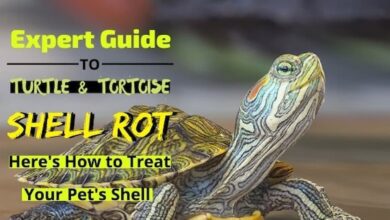
- Shell rot — uncommon in well-filtered Reeves tanks but possible with poor water quality.
- Respiratory infection — usually traced to under-temperature basking spot. Reeves are reasonably hardy but cold water hits them harder than sliders.
- Lethargy in winter — if your tank is unheated and the water dips below 18 °C, expect slower feeding. This is natural seasonal behaviour, not illness.
- Refusal to eat after a move or tank change — Reeves are shyer than most aquatic species. Give 5–7 days of quiet observation before worrying.
Full triage in Turtle Health & Feeding Guide.
Brumation
Wild Reeves brumate underwater through winter across most of their range. Captive Reeves don’t need to brumate to stay healthy if kept at consistent warm temperatures, but seasonal cooling triggers breeding behaviour and many keepers find their animals more vigorous if allowed a natural cycle.
If you’re cooling for brumation: gradually lower water temperature to 10–15 °C over 2–3 weeks in late autumn, stop feeding once the temperature is below 18 °C, maintain through winter, then gradually warm back to summer temperatures in spring.
Lifespan
Captive Reeves regularly live 25–40 years. Long-term commitment but more manageable than the 50-year species.
Legal status (Europe / UK)
Reeves turtles are legal to keep across the EU and UK without special permits — an important practical point for European keepers since sliders, cooters, painteds and snappers are all on the EU Invasive Alien Species list. British Chelonia Group resources cover the regulatory landscape in detail.
The species is endangered in the wild in its native range, so always buy captive-bred and ask the breeder for provenance. CITES paperwork applies to international transfers.
Buying advice
- Captive-bred only. Wild collection is heavy pressure on the remaining wild population.
- Hatchling prices: £40–120 in the UK, US$40–100 in the US. Premium for genuinely melanistic adult males.
- Check the shell. Three raised keels are normal — that’s the species. But look for unusual soft patches or pyramiding.
- Watch it swim. Healthy Reeves are active foragers and confident swimmers.
- Ask about lineage. Reeves are widely captive-bred but cross-breeding with other Mauremys species (notably M. sinensis) is common at the cheaper end of the trade. Pure Reeves are worth the premium.
Related on Turtle Times
- Reeves Turtle species overview — natural history and identification.
- Sexing a Reeves turtle — how to tell male from female.
- Care Sheets & Information — enclosure hub.
- Turtle Health & Feeding Guide — diet and medical companion.
- Turtle & Tortoise Care Index — master husbandry hub.
— Tom, Turtle Times. Got a Reeves question or photos of your male turning black? The contact form reaches my inbox — flag “Reeves” in the subject.
Got a question we haven’t answered?
The Turtle Times team answers reader questions every week. Drop us a note — Linda covers health, Priya handles softshells and side-necks, Tom takes aquatic species, Marcus covers tortoises, Jenna runs new-owner triage.
Ask the team → Browse the Q&A archive