Turtle Hatchling Care: First 6 Months Guide

Hatchling care is the most stressful period for first-time keepers and the period where the most preventable losses happen. Linda has answered more “my hatchling won’t eat” emails than any other topic and Jenna has talked dozens of new owners through the first month. This is the consolidated guide we wish more sellers handed out with the hatchling.
The headline: hatchlings are not miniature adults. Their care needs differ in important ways and the first 3–6 months are critical.
The first 24 hours home
The transition from breeder to your home is genuinely stressful for the animal. Manage it:
- Have the enclosure fully set up before pickup. Temperature stable, water cycled, basking spot reaching target temperature. Don’t introduce a hatchling to a tank that’s still establishing.
- Brief transport. An hour or less ideally. Insulated box, hot-water bottle wrapped in towel if cool weather.
- On arrival: place the hatchling gently in its enclosure. Don’t handle, photograph, show off to family for at least 48 hours. The animal needs quiet acclimation.
- Don’t expect feeding for 3–5 days. Stress shuts down appetite. Offer food daily but don’t panic at refusal.
- Soak the hatchling within the first day (tortoises and box turtles): shallow warm water (25 °C) for 15 minutes. Critical for hydration after transport.
Enclosure setup — species-specific
Aquatic turtle hatchlings
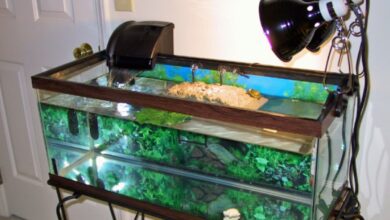
- Temporary smaller tank (60–100 litres) for the first year is acceptable; plan the upgrade.
- Shallow water — depth roughly equal to shell length. Hatchlings drown in deep water without easy haul-out access.
- Easy basking access — a low ramp or floating platform within easy reach.
- Higher water temperature than adults — 25–26 °C for most aquatic species; 27 °C for tropical species.
- UVB and basking lamp from day one. Don’t skip.
- Hide structures — aquatic hatchlings need cover. Driftwood, terracotta pipe sections, plant clumps.
Tortoise hatchlings
- Indoor enclosure for the first 2–3 years — outdoor predator vulnerability is significant for hatchlings. Hawks, crows, magpies, rats can take small tortoises in minutes.
- Tortoise table style 90×60 cm minimum.
- Substrate kept slightly damp — even Mediterranean species need higher humidity as hatchlings than as adults (counterintuitive but evidence-supported).
- Basking spot 32–35 °C.
- Cool end 22–25 °C.
- Multiple hides.
- Shallow water dish — easy access, daily refresh.
The humidity question for tortoise hatchlings
This is the area where modern advice has shifted significantly from what older books say. Research and breeder observation over the past 15 years has converged on the finding that hatchling tortoises — including Mediterranean species — benefit from higher humidity than adults to prevent pyramiding shell growth.
- Target humidity for hatchlings: 60–80 % in the enclosure overall, with a humid hide corner at 85 %+.
- Daily light misting of substrate.
- Humid hide — a small enclosed hide with damp sphagnum moss or coco coir.
- Daily soaks in shallow warm water for 10–15 minutes (3–4 times a week minimum).
The combination of higher humidity + daily soaks + slow growth produces hatchlings that develop smooth carapaces. The classic “dry hot” Mediterranean approach produces hatchlings that pyramid.
Feeding hatchlings
The mistakes new keepers make most often:
Too much, too rich
Hatchlings grow fast on appropriate diets. Feeding extra protein or extra-rich foods produces faster growth but worse-shaped shells. Stick to species-appropriate diets at species-appropriate portions.
Live food triggers
Many hatchling aquatic turtles and box turtles will only eat live, moving food initially. They’re visual hunters and respond to wriggle. Pellets and frozen food get ignored. Use:
- Live bloodworms (aquatic species).
- Small chopped earthworm pieces (most species).
- Live daphnia (small aquatic hatchlings).
- Small gut-loaded crickets (terrestrial hatchlings).
Most hatchlings learn to take frozen and dried food after a few weeks of live-feeding.
Calcium discipline
Growing fast means calcium demand is high. Dust food with calcium powder every other meal for the first 6 months. Cuttlebone in the enclosure from day one.
Daily feeding
Hatchlings need daily feeding for the first 3–6 months — not the alternate-day schedule that suits juveniles. Tiny portions, daily.
Common hatchling problems
Won’t eat in first week
Almost always stress + transport related. Maintain temperature, offer food daily, soak (tortoises), don’t panic. Almost all hatchlings start eating within 5–10 days. If feeding refusal continues past 2 weeks at proper temperatures, vet visit.
Sunken or swollen eyes
Vitamin A deficiency, often inherited from the parent or developed within the first few weeks of inadequate diet. Vet visit; injection treatment usually works in hatchlings if caught early.
Soft shell
Early-stage MBD. Causes: inadequate UVB (tube not real reptile-grade, or too far from animal), inadequate calcium supplementation, or both. Reversible at hatchling stage with corrected husbandry and calcium-D3 vet intervention.
Floating lopsided (aquatic species)
Respiratory infection in hatchlings can develop fast. Warm the setup, vet visit, antibiotics if confirmed.
Pyramiding starting at year 1
Visible scute peaks developing in the first year. Causes: too-dry husbandry, too-fast growth from rich diet, inadequate humidity in tortoise hatchlings. Adjust immediately — humidity, slower-growth diet, daily soaks. Damage already present is permanent but you can stop further damage.
Soft plastron, weak limbs
More serious MBD. Vet visit critical.
Handling hatchlings
Brief, infrequent. Hatchlings are stress-sensitive and damage easily. Practical rules:
- Lift only when necessary (soaks, vet visits, enclosure cleaning).
- Two-hand support — hatchlings drop and crack shells fall from low heights.
- Never on hard surfaces — over a soft towel or cupped hands.
- Don’t hand over to children for “just a look” — kids drop, hatchlings shatter.
Growth tracking
Weekly weighing for the first 6 months. Records help you spot:
- Steady gain: target is 5–10 % per week early on, slowing through the year.
- Plateau: 2–3 weeks without gain in an actively-feeding hatchling needs investigation.
- Loss: any significant weight loss is a red flag — vet visit.
- Growth rings on the carapace — visible scute layers indicate healthy steady growth.
When to move to adult-style husbandry
Rough milestones:
- Aquatic species: at year 1 transition to larger tank, deeper water, juvenile feeding schedule.
- Tortoises (Mediterranean): at year 2–3 transition to outdoor pen seasonally. Reduce humidity slightly but maintain daily soaks until year 3+.
- Tropical tortoises (red-foot, yellow-foot): maintain high humidity throughout; gradual size and intake increase.
- Box turtles: at year 2–3 transition to outdoor pen seasonally if climate allows.
Related on Turtle Times
- New Turtle Owners — pre-purchase and arrival checklist.
- My hatchling isn’t eating — reader Q&A — deeper troubleshooting.
- Turtle & Tortoise Care Index — master husbandry hub.
- Turtle Health & Feeding Guide — symptom triage.
- Finding a Reptile Vet — for hatchling vet emergencies.
— Linda and Jenna, Turtle Times. Hatchling problem and not sure what to do? Contact form — flag “hatchling” in the subject and we’ll prioritise the response.
Got a question we haven’t answered?
The Turtle Times team answers reader questions every week. Drop us a note — Linda covers health, Priya handles softshells and side-necks, Tom takes aquatic species, Marcus covers tortoises, Jenna runs new-owner triage.