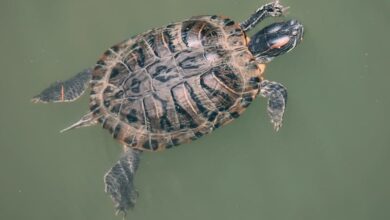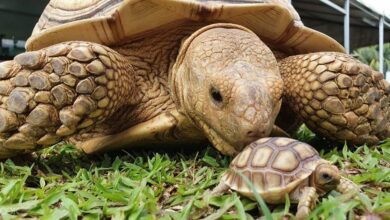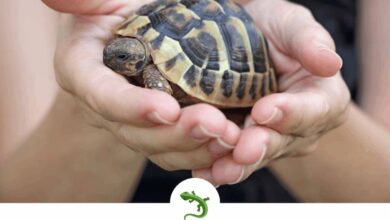
Mud turtles are the underdogs of the small-aquatic-turtle world. They’re smaller than sliders, hardier than maps, less smelly than musks, and yet they sit ignored on most pet-shop lists. Linda’s kept eastern mud turtles (Kinosternon subrubrum) on and off for fifteen years and recommends them to almost any new keeper with a 100-litre tank to spare.
Here’s the setup we’d run today.
Species in the genus
Kinosternon is the mud turtle genus — about 23 species across North, Central and South America. Common in the pet trade:
- Eastern mud turtle (K. subrubrum) — the default. Eastern US, hardy, 8–13 cm.
- Striped mud turtle (K. baurii) — Florida and Carolina, three pale stripes on the carapace.
- Yellow mud turtle (K. flavescens) — central US, slightly larger (up to 15 cm).
- Three-striped mud turtle (K. baurii, sometimes split) — smaller, brighter.
- Scorpion mud turtle (K. scorpioides) — Central/South America, more aggressive, less beginner-friendly.
Mud turtles share their family (Kinosternidae) with the musk turtles, and the husbandry overlap is significant — muds and musks are sometimes interchangeable in casual conversation. We’ll flag where they differ.
Adult size
Most mud turtle species mature at 8–13 cm of carapace length, with yellow muds occasionally reaching 15 cm. Males and females are similar in size for most species; females tend slightly larger.
Tank size
- Single adult: 100 litres (28 US gallons) minimum, 150 litres better.
- Pair: 200 litres minimum, long footprint preferred.
- Hatchlings: 40–60 litres temporarily, with planning for the upgrade.
Like musks, muds appreciate floor space more than depth. They’re bottom-walkers and slow swimmers, not column-cruising like sliders.
Water depth and access to surface
This is the most important species-specific point and the one that most often causes hatchling deaths:
- Hatchlings: 8–10 cm of water with very easy haul-out access. Many keepers go shallower until 6 months.
- Juveniles: 15–20 cm with multiple climbing routes.
- Adults: 20–30 cm with substantial driftwood / rock structure providing easy surface access.
Mud turtles are not strong swimmers. A deep tank without driftwood or rock structure means a turtle that may not be able to reach the surface for air. Hatchlings drown in such setups regularly.
Basking
Muds bask less than sliders but more than they’re given credit for. Provide the platform:
- Platform size: 1.5× shell length on the short axis.
- Basking temperature: 28–31 °C. Same range as musks.
- UVB: 5.0 reptile-grade tube, within 25 cm. Annual replacement.
- Basking lamp: 50–75 W flood, halogen or standard incandescent.
Water parameters and filtration
- Temperature: 22–25 °C adults, 25–26 °C hatchlings.
- Filter: rated for 2× tank volume.
- pH: 6.5–7.5; tolerant of soft acidic water (some southern species naturally inhabit tannic swampy water).
- Water changes: 25 % weekly.
Substrate — the digging point
Mud turtles do exactly what their name suggests: they dig into mud. In captivity that translates to:
- Fine pool-filter sand (5–7 cm deep) is the preferred setup. Muds bury themselves partially during the day and forage along the bottom. Sand is easier to clean than mud, gives them the digging behaviour, and traps less debris than gravel.
- Bare bottom is acceptable for new keepers but removes natural behaviour.
- Aquatic-plant substrate — some keepers use the layered approach (gravel under sand for planted setups). Risk of substrate compaction.
Never use small gravel; muds will swallow it.
Decor
- Driftwood — essential. Multiple pieces breaking the surface provide surface access and basking ramps.
- Smooth river rocks — build natural-looking sloped hides.
- Live plants — muds nibble at soft plants. Anubias attached to wood survives best.
- Hiding spots — muds love cover. Cave decorations, PVC tubes, large rock overhangs.
Diet
Mud turtles are omnivores leaning heavily carnivorous. Plant matter is a smaller component than for sliders or painteds.
- Hatchlings (daily): bloodworms, chopped earthworm, krill, hatchling pellets soaked.
- Juveniles (every other day): earthworms, snails (excellent for calcium), pellets, the occasional mussel.
- Adults (every 2–3 days): whole nightcrawlers, krill, mussel, raw shrimp, pellets. Offer plant matter weekly (collard greens, anacharis) even if they ignore it.
Calcium dust twice a week. Multivitamin weekly. Snails as a regular protein source — muds crunch them effortlessly and get whole-shell calcium with the meal.
Behaviour and handling
Mud turtles are calm. They lack the dramatic musk of their stinkpot cousins (some do musk but less intensely), they don’t bite the way snake-necks do, and they tolerate handling reasonably well once acclimated. They’re not handling pets, but they’re the most laid-back small aquatic turtle in the trade.
They’re also surprisingly active when they feel safe. Daytime foragers, busy when the lights are on, slow down at night.
Single-keeping is ideal. Pairs work in adequate space. Don’t mix with sliders or other large species — the muds will be bullied at feeding time.
Brumation
Mud turtles brumate (the reptile equivalent of hibernation) in the wild from late autumn through spring. Captive specimens don’t need to brumate to stay healthy — year-round indoor temperatures keep them feeding normally — but some keepers brumate their muds for breeding purposes.
If you’re not breeding, keep the water at 22–25 °C year-round and feed through winter. If you are breeding, brumation is a multi-week process that requires careful preparation; we’d point you at the British Chelonia Group resources for the protocol.
Health red flags
- Shell rot — common in under-filtered tanks. White or grey patches; dry-dock and treat early.
- Respiratory infection — usually traced to cold water. Wheezing, open-mouth breathing, lopsided floating.
- Vitamin A deficiency — swollen eyes from an all-bloodworm diet. Diversify protein sources.
- Refusal to eat — check water temperature first. Mud turtles below 21 °C often stop eating without being sick.
Full triage in Turtle Health & Feeding Guide.
Lifespan
Captive mud turtles regularly live 30–50 years. Long-term commitment.
Buying advice
- Captive-bred only. Hatchling prices US$30–75 for common species.
- Check the shell for soft spots and unusual flaking.
- Watch it move. Active foraging at the bottom is a good sign.
- Specialist reptile breeders beat generic pet shops every time.
Indoor vs outdoor housing
Like other small aquatic turtles, mud turtles thrive in outdoor ponds when the climate allows. A 3 m² surface area with 60 cm depth, a basking log, and predator-proof mesh roof gives them everything they want and lets them brumate naturally in winter.
Indoor keepers should accept that an indoor tank is the lesser option but a perfectly fine one. Focus on filtration capacity, water-change discipline, and providing genuine substrate (sand) for the digging behaviour that mud turtles evolved to express.
Breeding notes
Mud turtles breed readily in captivity. The trigger is usually a cooling period (water dropped to 14–17 °C for 6–8 weeks in autumn-winter) followed by a warming period. Females need a soft-substrate nesting area — outdoor pond keepers leave a sloped sandy bank; indoor keepers provide a separate plastic tub of damp sand the female can dig in.
Eggs incubate at 26–30 °C; hatch in 75–110 days depending on temperature. Mud turtles do not have strict temperature-sex determination — most species produce mixed clutches across the standard incubation range.
Common myths
- “Mud turtles need muddy water.” False. They tolerate stained or tannic water in the wild (the species name is misleading) but in captivity they need clean, well-filtered water like any other turtle.
- “Mud turtles are nocturnal.” False. They’re active during the day and rest at night, like most aquatic turtles. Shy in unfamiliar setups but daytime foragers when settled.
- “Mud and musk turtles are interchangeable.” Mostly true for husbandry but they’re distinct species with subtle behavioural and dietary differences. Mud turtles are slightly calmer and more plant-tolerant than musks.
Why we recommend muds for first-time keepers
Three reasons mud turtles win our “best first aquatic turtle” recommendation alongside musks: they stay small (under 15 cm), they tolerate husbandry errors better than larger species (cooler water, missed water changes, dietary lapses), and they have genuine personality without the “don’t handle me” defensive temperament of snake-necks or the heavy musk of stinkpots.
Related on Turtle Times
- Mud Turtle species overview — natural history and identification.
- Musk Turtle species overview — closely related, similar husbandry.
- Care Sheets & Information — enclosure hub.
- Turtle Health & Feeding Guide — diet and medical triage.
- Turtle & Tortoise Care Index — full husbandry framework.
— Linda, on behalf of the Turtle Times team. Got a mud turtle setup or health question? The contact form reaches my inbox — flag “mud turtle” in the subject.
Got a question we haven’t answered?
The Turtle Times team answers reader questions every week. Drop us a note — Linda covers health, Priya handles softshells and side-necks, Tom takes aquatic species, Marcus covers tortoises, Jenna runs new-owner triage.
Ask the team → Browse the Q&A archive