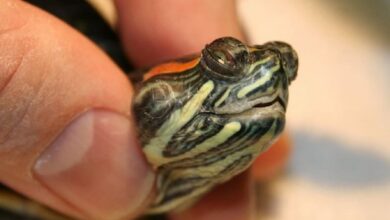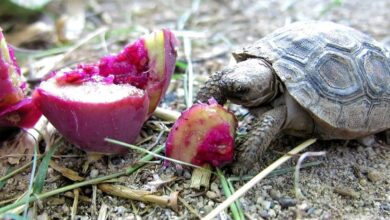
Hermann’s tortoise (Testudo hermanni) is the species we recommend most often to UK and European first-time tortoise keepers — legal across the EU/UK, hardy in temperate climates, manageable adult size, and a reasonably forgiving species for new owners. Marcus has kept a pair of Western Hermann’s in an outdoor pen in his back garden for fifteen years and considers them the best entry-point into tortoise keeping.
This is the husbandry guide we’d hand to anyone considering their first Hermann’s tortoise.
Two subspecies — which you actually have matters
Two recognised subspecies in the trade:
- Western Hermann’s (T. h. hermanni) — the smaller of the two, native to Italy, southern France, Mallorca, Menorca. Adults 12–18 cm shell, distinctive yellow-and-black banded pattern. Strictly protected in the wild.
- Eastern Hermann’s (T. h. boettgeri) — larger, native to the Balkans, Greece, Turkey. Adults 18–25 cm shell. The more common subspecies in the trade.
Both are kept similarly — the differences are size and slight pattern variations. We’ll use Eastern Hermann’s as the reference for size recommendations.
Adult size and lifespan
- Eastern Hermann’s: 18–25 cm shell length, 1.5–3 kg.
- Western Hermann’s: 12–18 cm shell length, 0.5–1.5 kg.
- Lifespan: 50–70 years in captivity. Some specimens documented past 90.
Plan for the long term — Hermann’s tortoises outlive most pets dramatically. Succession planning matters.
Outdoor pen — the right setup for the UK and Europe
Hermann’s are temperate-zone tortoises. They thrive in outdoor pens across most of the UK and continental Europe from April to October, with indoor or insulated-shed accommodation through winter.
Minimum outdoor pen for a single adult:
- Footprint: 4×3 m. Bigger is always better.
- Walls: 30–40 cm above ground, buried 15 cm. Hermann’s climb less than Russian tortoises but will push against walls.
- Substrate: grass and low weeds across most of the pen, with bare-earth patches where they can dig shallow scrapes.
- Hide: wooden shelter (an upturned crate with one side cut out works) with hay or straw bedding. Position so morning sun warms the entrance.
- Basking spot: south-facing flat stone or paving slab where they can warm up. Hermann’s bask for several hours each morning.
- Shade: 30 % of the pen shaded by shrubs, hedge or shade-cloth. Important on hot summer days.
- Water: shallow dish refreshed every other day.
Plant the pen with edible weeds — dandelion, plantain, clover, hibiscus — and the tortoise feeds itself through summer.
Indoor housing — for hatchlings and winter
Hatchlings are kept indoors for the first 2–3 years before being moved outside (predator vulnerability, temperature variability). Adult winter accommodation depends on whether you brumate the tortoise (most UK keepers do) or keep it warm year-round (a smaller minority).
Indoor enclosure (tortoise table style):
- Size: 120×60 cm minimum for a single hatchling, scaling to 200×100 cm for adults.
- Open-top design — not a closed glass enclosure. Closed setups trap humidity and overheat.
- Substrate: soil-and-sand mix (70/30) 5–7 cm deep, with a small patch kept lightly damp for moisture access.
- Basking lamp: 50–75 W flood at one end, producing 32–35 °C at substrate level under the bulb.
- UVB tube: reptile-grade T5 HO, replaced annually. Within 30 cm of basking spot.
- Cooler end: 20–22 °C ambient.
- Photoperiod: 12–14 hours summer, 10 hours winter.
- Hides: at least two — one near the basking spot, one in the cool end.
Brumation (hibernation)
Hermann’s brumate naturally in the wild from late October through March. Captive Hermann’s in the UK and Europe usually brumate too — healthier long-term, triggers breeding, matches natural rhythm.
The protocol in summary (we cover it in depth in our brumation guide):
- Late summer feeding to build reserves.
- Two weeks of fasting in early autumn to clear the gut.
- Gradual cooling over 2–3 weeks to 4–8 °C.
- 12–14 weeks brumating in an insulated box, fridge, or cool outdoor hide.
- Gradual warming back to active temperatures in late winter.
Don’t brumate sick or underweight tortoises. The pre-brumation vet check is essential.
Diet
See our Mediterranean Tortoise Diet Guide for the full framework — Hermann’s diet is identical to the broader Mediterranean group. Headline:
- Wild weeds where possible (dandelion, plantain, clover, sow thistle).
- Supermarket greens as backup (collard greens, mustard greens, romaine).
- Edible flowers (hibiscus, nasturtium, rose petals).
- Almost no fruit. Almost no protein. Calcium dust twice a week. Multivitamin once a week.
Legal status (UK and EU)
Hermann’s tortoises are Annex A under EU/UK CITES regulations — the strictest tier. Practical implications:
- Every tortoise must come with an Article 10 certificate. Don’t buy without one.
- Selling a Hermann’s without an A10 certificate is illegal.
- The certificate must be specific to the individual tortoise (transaction-specific A10s exist but for transfer rather than ongoing keeping).
- Don’t collect wild tortoises if travelling in Mediterranean Europe — this is a crime in every range country.
The British Chelonia Group has the definitive UK guidance on Article 10 paperwork and is the resource we point UK keepers at.
Health red flags
- Pyramided shell — diet too high in protein or sugar, growth too fast. Established pyramiding is permanent.
- Runny nose / open-mouth breathing — respiratory infection. Vet visit; antibiotics required.
- Swollen eyes, refusal to eat — vitamin A deficiency.
- Soft shell — MBD from inadequate UVB or calcium.
- Loose stools — too much fruit or too-watery vegetables. Cut both.
- Cloudy eyes after brumation — common, usually resolves within a week. If persistent, vet visit.
Full triage in Turtle Health & Feeding Guide.
Buying advice
- Article 10 certificate non-negotiable. No certificate = don’t buy.
- Buy from a specialist breeder, not a pet shop. Specialist breeders produce healthier hatchlings and provide proper paperwork.
- Consider adopting an adult. Hermann’s tortoise rescues in the UK and US always have animals available; adoption skips the hatchling phase.
- Hatchling prices: £150–400 depending on subspecies and breeder. Cherry-picked locality animals at the top end.
Related on Turtle Times
- Mediterranean Tortoise Diet Guide — full diet framework.
- Care Sheets & Information — enclosure hub.
- Turtle Health & Feeding Guide — medical companion.
- Turtle & Tortoise Care Index — master husbandry hub.
- UK keepers buying guide — legitimate sources.
— Marcus, Turtle Times. Got a Hermann’s question? Contact form — flag “Hermann’s” in the subject.
Got a question we haven’t answered?
The Turtle Times team answers reader questions every week. Drop us a note — Linda covers health, Priya handles softshells and side-necks, Tom takes aquatic species, Marcus covers tortoises, Jenna runs new-owner triage.
Ask the team → Browse the Q&A archive