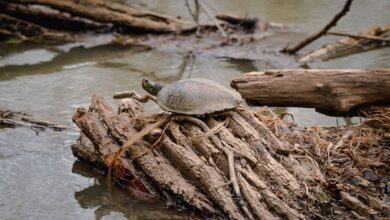
The Eastern box turtle (Terrapene carolina carolina) is the most-kept box turtle in the US pet trade and the species most readers email us about. Linda has kept a small group of three captive-bred Easterns in an outdoor pen for ten years and answers more Eastern-box-turtle questions than any other species. This is the dedicated guide we hand to anyone considering one.
Species overview
Eastern box turtles are native to the eastern United States, from Maine to Florida and west to Michigan, Illinois and Texas. Wild populations have declined significantly from historical highs due to habitat loss and road mortality.
Adult size:
- Both sexes: 11–17 cm shell length, 350–700 g.
- Lifespan: 40–100+ years. Some wild specimens documented past 130. Multi-generational commitment.
The hinged plastron is the defining anatomical feature — the front flap closes completely against the carapace when the turtle withdraws, sealing the animal inside the shell. This is unique to box turtles and a few unrelated mud turtle species.
Indoor vs outdoor housing
Eastern box turtles thrive outdoors in their native temperate climate. Outdoor housing is strongly preferred:
- Outdoor pen (recommended): 4×3 m minimum for a single adult, larger for groups. Heavily planted with low shrubs, ferns, grasses, leaf litter. Half-buried hide structures. Shallow soaking dish.
- Indoor enclosure (acceptable for hatchlings or winter): 120×60 cm minimum for hatchlings, 200×100 cm for adults. Open-top tortoise table style with high humidity in one corner.
Indoor-only adult box turtles are a long-term welfare compromise. The species evolved on dappled-shade forest floor with seasonal humidity variation; reproducing that indoors is harder than it looks.
Outdoor pen requirements
- Walls: 30 cm above ground, buried 15 cm to prevent digging out.
- Substrate: soil with deep leaf litter (3–5 cm of oak or beech leaves). Eastern boxes burrow into leaf litter for resting and brumation.
- Plants: low-growing shrubs and ferns provide shade and cover. Hostas, hibiscus, ferns, low ornamental grasses all work.
- Hides: multiple. Hollow log sections, cork-bark sheets propped against pen walls, dense plant clumps.
- Soaking dish: shallow, large enough for the turtle to immerse plastron. Refresh daily.
- Shade: 60 % of pen shaded by canopy or shrubs. Eastern boxes overheat in full sun.
- Humidity microclimate: one corner kept extra-damp via daily misting or rain access. Important for healthy scute growth and shedding.
- Predator-proofing: wire mesh roof or fully-enclosed run. Eastern boxes are vulnerable to raccoons, dogs, large birds.
Indoor enclosure setup
For hatchlings (first 2 years) and winter housing:
- Tortoise table: 120×60 cm minimum; bigger for adults.
- Substrate: 5 cm of cypress mulch or coconut coir, lightly damp.
- Hides: minimum two — one near basking spot, one in cool corner.
- Basking spot: 32–35 °C at substrate level under the lamp.
- Cool end: 20–22 °C ambient.
- Humidity: 60–80 %. Daily light misting maintains it.
- UVB tube: reptile-grade T5 HO, replaced annually.
- Shallow water dish kept full and clean.
- Photoperiod: 12 hours summer, 10 winter.
Brumation
Wild Eastern box turtles brumate from October/November through March/April, buried in leaf litter or shallow soil. Captive Easterns brumate naturally in outdoor pens with deep leaf litter, or can be brumated in a fridge box (4–8 °C for 12–14 weeks) following the standard tortoise protocol.
See our brumation guide for the full process. Pre-brumation vet check is essential.
Diet
Eastern box turtles are omnivores with a substantial fruit component — one of the more varied diets in the box turtle group:
- ~50 % animal protein — earthworms (favourite), slugs, snails, gut-loaded insects.
- ~30 % fruit and soft vegetation — strawberries, blueberries, melon, mushrooms, soft greens.
- ~20 % leafy greens and weeds — collard greens, dandelion, plantain, hibiscus.
Full diet framework in our Box Turtle Diet Guide.
One Eastern-specific note: never feed fireflies/lightning bugs. They’re highly toxic to box turtles and have killed Easterns multiple times in documented cases. Outdoor pen keepers in firefly territory need to ensure the pen is firefly-secure or remove the turtle to indoor housing during firefly season.
Supplements
- Calcium powder (without D3): dust protein meals 2–3 times a week.
- Multivitamin with retinol: once a week.
- Cuttlebone free-choice in the pen.
Behaviour and temperament
Eastern box turtles are slow, observant, methodical foragers. They’re also surprisingly intelligent — documented to recognise individual keepers, remember enclosure layouts after months away, and develop preferences for specific food sources.
Same-sex groups generally work; males may show mild courtship aggression toward females and other males in spring. Don’t mix Eastern box turtles with other species — the pace mismatch produces stressed boxes.
Eastern boxes do not handle well. Brief lift and replacement is OK; sustained handling causes stress. They’re observation pets rather than interactive ones.
Health red flags
- Swollen eyes — vitamin A deficiency, very common in Eastern boxes on inadequate diets.
- Respiratory infection — from cold or excessively humid conditions.
- Shell pitting/rot — from chronically wet conditions without dry-out opportunity.
- Stress lines on the carapace — visible growth rings from interrupted feeding/temperature periods. Sign of inadequate husbandry.
- Refusal to feed for weeks — can indicate parasites, stress, or seasonal behaviour. Distinguishing requires vet assessment.
Full triage in Turtle Health & Feeding Guide.
Legal status
Eastern box turtles are protected to varying degrees across their US range:
- Federal: CITES Appendix II for international trade.
- State-level: Highly variable. Some states (Indiana, Connecticut, Massachusetts) protect them outright with no possession allowed. Others permit captive-bred only. Others have generous personal-keeping allowances.
- UK and EU: Legal with CITES Article 10 paperwork.
Check your specific state law before buying. Never take a wild Eastern box turtle home — this is illegal in most range states and counterproductive even where legal (they have strong homing instincts and stress in new environments).
Buying advice
- Captive-bred only. Hatchling prices US$80–300, more for premium pattern adults.
- Buy from specialist breeders. Generic pet shops carry box turtles inconsistently.
- Consider adoption. Eastern box turtle rescues exist across the eastern US; rehoming an adult skips the hatchling phase and supports rescue work.
- Don’t adopt found-in-the-wild specimens. A box turtle in your garden has a home territory; moving it to your enclosure removes it from its known landscape and often kills it.
Related on Turtle Times
- Box Turtle species overview — covers the four common North American subspecies.
- Box Turtle Diet Guide — the comprehensive feeding companion.
- Brumation Guide — protocol for safe winter rest.
- Turtle Health & Feeding Guide — medical companion.
- All turtle breeds — species index.
— Linda, Turtle Times. Got an Eastern box turtle question or photos of your outdoor pen layout? Contact form — flag “Eastern box” in the subject.
Got a question we haven’t answered?
The Turtle Times team answers reader questions every week. Drop us a note — Linda covers health, Priya handles softshells and side-necks, Tom takes aquatic species, Marcus covers tortoises, Jenna runs new-owner triage.