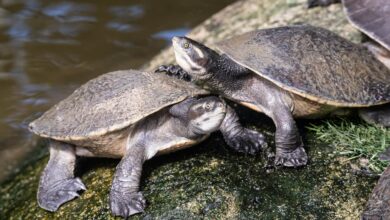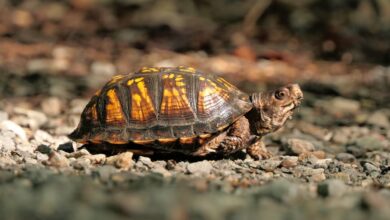
The Indian Star tortoise (Geochelone elegans) is one of the most striking species in captive collections — the radiating yellow star pattern on each dark scute is unmistakable. Marcus has kept a single male Star in an indoor enclosure for six years (climate doesn’t allow outdoor housing in the UK most of the year) and considers them the prettiest tortoise we’ve covered. They’re also one of the most legally complicated species to acquire and need substantial setup investment.
Species overview
Indian Stars are native to dry deciduous forest and scrubland across India, Sri Lanka and Pakistan. Wild populations have crashed due to illegal collection for the pet trade — the species is listed as Vulnerable on the IUCN Red List and is CITES Appendix I (the most restrictive tier), meaning international commercial trade is essentially prohibited.
Adult size:
- Indian populations: 18–25 cm shell length, 1.5–3 kg.
- Sri Lankan populations: 25–35 cm shell length, 3–7 kg. Distinctly larger.
- Females larger than males in both populations.
Lifespan: 30–80 years.
Legal status — read this before considering one
This is the part most prospective keepers don’t understand. Indian Star tortoises are CITES Appendix I globally. Practical implications:
- International commercial trade is prohibited. Animals imported into the EU/UK after the 2018 elevation to Appendix I require near-impossible paperwork.
- EU and UK keepers need an Article 10 certificate and detailed provenance for any Star tortoise. Many existing pets have inadequate paperwork; legitimate captive-bred animals are very limited in supply.
- US keepers: CITES Appendix I means import requires special permits; domestic captive-bred animals are rare but legal where state law permits.
- India: Indian Star tortoises are protected wildlife. Possession in India requires permits and the live wildlife trade is essentially banned.
- Don’t buy without comprehensive paperwork. Many Star tortoises in the trade are illegally-imported wild-caught animals.
If you can’t verify the paperwork, don’t buy. Wild-caught Star tortoises arrive stressed, often parasite-laden, and supporting that trade actively harms the remaining wild populations.
Why we don’t recommend them for most keepers
- Legal complexity (above).
- Setup cost is substantial — humid tropical indoor housing or warm-climate outdoor pen only.
- Sensitivity to husbandry mistakes — pyramiding and respiratory issues develop quickly with marginal conditions.
- Limited captive-bred supply.
If you want a striking tropical-pattern tortoise without the legal challenges, consider red-foots or even some of the radiated tortoise locality types where legitimate captive-bred supply exists.
Enclosure
Indian Stars need warm, somewhat humid conditions. The setup varies between indoor enclosures and outdoor pens (in suitable climates):
Indoor enclosure (most temperate-climate keepers)
- Floor area: 200×100 cm minimum for an adult Indian Star; 250×120 cm for adult Sri Lankan.
- Walls: 40–50 cm tall, opaque (Stars are climbers).
- Substrate: 5–7 cm of soil mixed with cypress mulch and a little sand. Kept lightly damp throughout, with one corner held at higher humidity (a damp moss bedded hide).
- Basking spot: 32–38 °C surface temperature under a 75–100 W flood lamp.
- Cool end: 24–26 °C ambient.
- Night temperature: never below 22 °C.
- Humidity: 60–70 % ambient, with a humid hide corner at 80 %+.
- UVB: T5 HO 10.0 tube within 30 cm of basking spot, replaced annually.
- Multiple hides across the enclosure.
- Shallow water dish at the cool end.
Outdoor pen (warm humid climates only)
In tropical and sub-tropical climates with year-round warmth, outdoor pens work. Setup mirrors the red-foot pen approach with substantial planting, shade, and humidity provision.
Diet
Indian Star tortoises are strict herbivores with a high-fibre, low-protein diet:
- Grasses — Bermuda grass, orchard grass, timothy. Both fresh and as hay.
- Leafy weeds — dandelion, plantain, mallow, hibiscus leaves and flowers.
- Soft greens in moderation — collard greens, mustard greens, romaine. Less than for tropical tortoises like red-foots.
- Occasional fruit — once a month. Strawberry, banana, melon in tiny portions. Stars are more fruit-tolerant than Mediterranean tortoises but less than red-foots.
- Cactus pads (opuntia, thorns removed) — well-tolerated.
Calcium dust twice a week, multivitamin weekly with retinol. Cuttlebone free-choice.
Strict prohibitions: no protein supplements, no dog food, no animal protein. Indian Stars are not omnivorous and protein feeding causes kidney and shell problems.
Health red flags
- Pyramiding — the species is particularly prone. Causes: too-dry husbandry, too-fast growth, dietary protein. Get humidity right from hatchling stage.
- Respiratory infection — from cool damp conditions. Stars need warm + humid, not cool + humid.
- Soft shell, weak limbs — MBD. Inadequate UVB or calcium.
- Parasites — common in wild-caught imports.
- Diarrhoea — usually too much fruit or too-watery vegetables.
Full triage in Turtle Health & Feeding Guide.
Behaviour
Indian Stars are observation pets — not interactive in the red-foot sense. They’re shy, slow-moving, methodical foragers. Once acclimated they tolerate observation at close range but don’t actively approach keepers.
Pairs and small groups work in adequate space; males may show mild courtship aggression in the breeding season.
Brumation
Indian Stars do not brumate in the wild — they’re tropical-climate species with year-round warmth. Captive specimens should never be cooled for brumation; year-round warm housing is essential.
Buying advice
- Captive-bred with full paperwork only. Article 10 certificate (EU/UK), CITES Appendix I provenance documentation. Anything else is illegal trade.
- Buy from specialist breeders with long-established breeding programmes.
- Hatchling prices: £500–2,000+ for legitimately-traced captive-bred animals. Cheaper prices usually indicate illegal-origin animals.
- Confirm population. Indian vs Sri Lankan populations have different adult sizes and slightly different husbandry preferences.
- Don’t accept animals without paperwork. The wild-caught trade is what’s pushing the species to extinction.
Related on Turtle Times
- Red-Foot Tortoise Care — similar tropical species with simpler legal landscape.
- Mediterranean Tortoise Diet — the closely-comparable herbivore framework.
- Care Sheets & Information — enclosure hub.
- Turtle Health & Feeding Guide — medical companion.
- Turtle & Tortoise Care Index — master husbandry hub.
— Marcus, Turtle Times. Considering an Indian Star tortoise or trying to verify paperwork on an existing animal? Contact form — flag “Indian Star” in the subject. We always reply to provenance-verification questions.
Got a question we haven’t answered?
The Turtle Times team answers reader questions every week. Drop us a note — Linda covers health, Priya handles softshells and side-necks, Tom takes aquatic species, Marcus covers tortoises, Jenna runs new-owner triage.