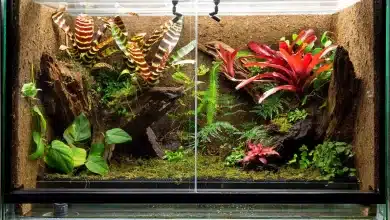

Axolotl Tank Setup Guide
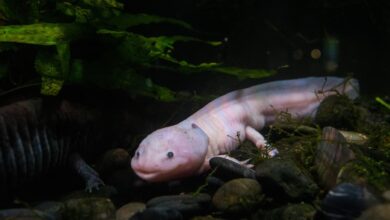
Axolotls are also called Ambystoma Mexicanums and can be found near Mexico City in the Lake of Xochimilco.
Axolotls make great pets. These cute amphibians can grow up to 30cm in length and live for 10-12 years. Axolotls eat a variety of foods, including fish, worms and molluscs. Bloodworms or axolotl seed pellets are good for pet axolotls.
The aquatic reptiles in this tank are calm and mild. They love to play and hide around the plants and decor of their aquarium, and they will also come up and watch you as you look at them through the glass.
How To Care For An Axolotl
The most important thing you can do to keep your axolotl healthy and happy is maintain the water chemistry. This is done by regular testing, and using an aquarium filter. Most filters cannot pick up food that is large, like uneaten food or food regurgitated. Food waste must be removed after every feed, as this can lead to infection.
Every week, the tank should be cleaned using a gravel siphon to remove any debris that has not been picked up by the filter. Unconsumed or regurgitated foods, along with wastes, can contribute to high levels of ammonia, nitrite, and other contaminants. Aquarium water should be checked weekly by using a water-quality testing kit. The pH level should be between 6.8 and 7.4, although closer to 7 is preferable.
Axolotls prefer cold water, so they require a temperature between 14 C to 18 C. It is recommended you use a cooler that runs 24/7 at a constant 18 C. Axolotls are known to regrow any part of their body that has been damaged or bitten. This includes limbs and parts of tails.
The axolotls can withstand slight changes in the environment. They even have a delicate, soft body, with a permeable, soft skin.
In addition, their bodies are mainly made up of cartilage and not bones. You should only handle them if necessary. If you need to move the axolotls from their aquarium, use a fine mesh net. This will prevent any body parts getting tangled.
After you have set up their home correctly, it is usually necessary to spend a couple of hours each week feeding and cleaning them. Axolotls are generally quite bold and will happily move around in the axolotl aquarium while you watch them. When a person is watching them closely, they are not likely to come close to the tank’s edge.
They are social but do not require tank buddies. Axolotls are known to nibble at fish and will eat them if they’re kept in the same tank as other animals or species. You should also be careful when housing other axolotls.
Axolotls cannibalize their own children. It is best to raise them in separate enclosures. In some instances, adult axolotls can be kept together. However, you should watch out for any cannibalistic behavior. The axolotl can regenerate any body part that is bitten off by its tankmate. It is better to avoid these situations.
What To Feed An Axolotl
Axolotls eat a variety of colorful foods in nature. In the wild, they will consume snails as well as fish and other amphibians. They thrive in captivity on high-protein foods such as earthworms, Bloodworms and brine shrimp.
Avoid live foods like mice and feeder fish. They will happily accept these snacks but they can introduce parasites to the tank, making your Axolotl ill.
Frozen foods work best.
Place the food close to the Axolotl and it should be easy for them to see and eat.
Axolotls need to be fed twice or three times per week. It may seem strange at first, if you are used to feeding your pets every day. But this is totally normal!
Axolotls should be fed by hand using large tweezers or tongs. This will reduce the waste food and the uneaten portions in the tank. It is recommended that they are fed every day, preferably at night because of their habitual nocturnal behavior. Axolotls eat their food in whole pieces, so you should ensure that they get a ‘bite-sized’ portion.
Axolotl Health Issues
Common health issues in axolotls
Axolotls do not have scales to protect them, so they are susceptible to a fungal infection if they come into contact with abrasive surfaces in the tank. Uneaten or regurgitated foods (especially meat) can cause a fungal disease if your axolotl is in contact with them.
Heat Stress
Any water temperature over 20 C is considered to be heat stress.
Ammonia Burn
Although ammonia is poisonous to fish of all species, axolotls have a higher sensitivity to it due to their lack of scales.
Red Flags
Does your axolotl show any signs of illness or disease? Please contact your veterinarian if you answered yes.
White film on the tail or body? Use ‘Pimafix or an antifungal treatment.
Check water quality if its gills are less “fluffy”.
Do You Need A Chiller?
It is important to keep the water temperature in your aquarium at a reasonable level. The chiller maintains a desired tank temperature by using an external cooling system. Thermostatically controlled chillers are the most reliable and safest way to control water temperatures. This is especially important for animals like axolotls, which thrive at cooler temperatures. In hotter climates such as Australia it is important to maintain a water temperature between 14 C and 18 C. This will prevent your axolotl from getting sick.
How to Choose the Right Size Tank
Axolotls require a specific amount of room to live and survive. A single axolotl needs at least a tank of 20 gallons. You will need a tank that is twice as big if you plan to have two axolotls.
It’s just 20 gallons per Axolotl. A larger tank will allow your salamander to thrive and move more freely. It will also save you time, as the water won’t need to be changed frequently.
The tank’s surface area is not necessary for such aquatic species. The water level should at least be slightly higher than the length of the axolotl. The addition of additional depth will improve water quality and give animals enough room to move.
Keep the tank away from direct sunlight and in an area that is completely cool. The water should be between 57 and 68 degrees Fahrenheit, or 14 to 20 Celsius. Make sure the water temperature doesn’t exceed 75 degrees Fahrenheit (24 Celsius).
For them, the best lighting would be a hidden hiding place, either an aquarium castle or a dark spot next to their tank. Some owners leave the tank’s bottom bare while others believe that this can be stressful for them as they may not have a good foothold.
If gravel is to be used as a bottom, then it must be coarse, larger than the axolotl’s head. They may ingest fine gravel that can cause obstruction.
Axolotls prefer tap water that has been treated with aquarium conditioners to remove chloramines. Use tap water instead of distilled and keep the pH between 6.5-7.5. Filtered aquariums are easier to maintain than unfiltered ones, as they don’t require constant water changes to remove waste.
Filtering rates must be low for those using filters in their tanks for axolotls. The axolotls may be stressed by a powerful filter which creates strong currents.
Cleaning the filtered tank generally involves a 20 percent change of water every week, and siphoning the waste out from the bottom.
For those who do not use filters, you should perform a daily 20% water exchange. Do not do a complete water exchange as this can cause water chemistry to change drastically and stress animals.
Axolotls are a popular choice, but there are some important considerations. The standard 10 gallon aquarium is suitable for small and young species. Adults should be housed in larger aquariums.
The axolotl is nocturnal. Axolotls are stressed by bright lights and few or no hiding spots. Axolotls prefer areas that they can hide from the sun during the day. Axolotls will hide in hiding places such as hollow ceramic decoration, PVC pipe, or stacked rocks. Other decorations are optional.
The tank should be free of sharp edges and rough surfaces. The tank must have more hiding spots than any other species. This allows them to easily avoid one another & prevents their aggressive behaviour that could lead to lost limbs and stress or even Death in worst case scenario.
How to Set Up a Tank
Choose a tank that is suitable for your axolotl. They can grow up to a foot in length. If your axolotl measures between 1-5 inches, a 20-gallon tank is the best choice. You will have to upgrade to a 40 or 30 gallon tank if your axolotl measures over 6″.
- Axolotls are more interested in swimming for a longer distance than diving deeper or shorter. Tanks larger than 20 gallons are best.
Buy the Correct Equipment
You will need a thermometer and a bubble or sponge filter to set up your axolotl aquarium. Axolotls like a 60-64degF temperature.
- You shouldn’t put gravel into the tank because it is easy to swallow rocks. Instead, purchase a vacuum that can sift the sand through and remove any debris.
- The best filter to use is a sponge. They are able to suck up particles, allowing for beneficial bacteria to grow.
- Axolotls should not be kept in an area with high water flow. This will stress them and cause their death. The axolotls like to move around on the bottom with minimal flow.
Get Your Axolotl Tank The Accessories It Needs
You will also need decorations such as caves or rocks to decorate the aquarium.
- Any color of sand that’s safe for the axolotls is suitable. However, it is better to use a tank with a flat bottom for babies, since they could accidentally consume substrate.
- You can decorate your axolotl aquarium with rocks (as large as the axolotl’s head), plastic caves, fake plants or artificial flowers. Be sure that the decorations you use in your tank do not have sharp edges, or they may scratch your axolotl.
- You can use rocks to decorate your garden. Place them in a pattern, and create caves around the stones because they are sensitive to light. Rocks are often stacked and staggered.
Filling The Tank
Fill the tank with water. Water conditioners are necessary because tap water contains traces of toxic chlorine that can kill aquatic freshwater animals such as axolotls. Water conditioners eliminate chlorine by chemical reaction.
- Some products have different directions on how to apply the conditioner.
Check The Water Quality
Add Your Axolotls into the Tank
Can I Put Fish With Axolotls?
Axolotls Need To Be Acclimatized
Important:
You should not add your axolotls straight into the tank. You can cause them to go into shock if you have too much difference in the temperatures of your water.
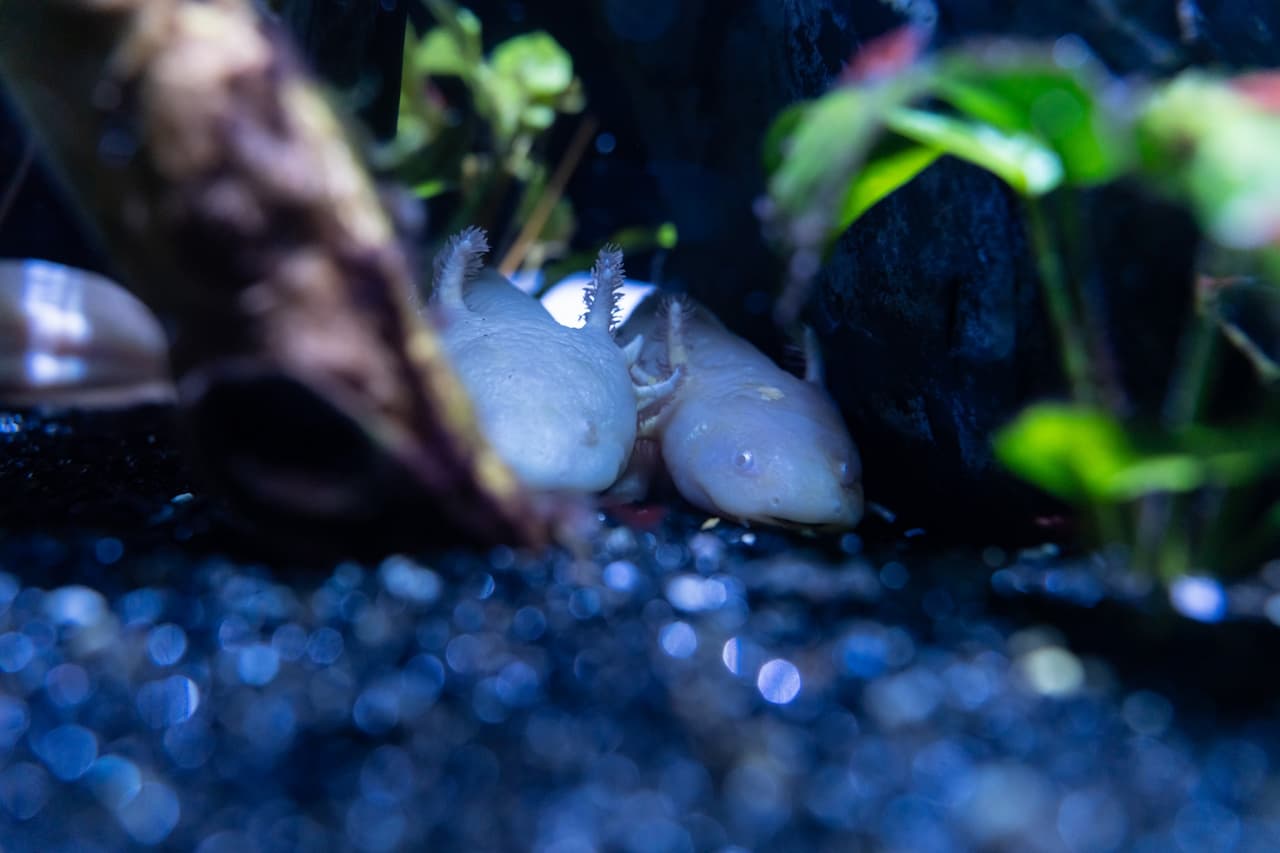
Can An Axolotl Be Removed From Water?
Axolotls are not to be taken out of the water despite their looks.
They shouldn’t even be touched!
Axolotls have a delicate body. The majority of the body is cartilage, not bone. They are more prone to injury as a result.
Use a net with a fine-mesh if you have to remove the flies. It can be difficult to capture them, but a fine mesh net is safer than using your hands.
Do not leave the fish out of water longer than 30 seconds.
Our Recommended Axolotl Tanks
Landen 60P 26.23 Gallon Ultra Clear All Glass
Rimless Low Iron Aquarium Tank with Rear Filtration Chamber for Salt and Fresh (Return Pump Included) 23.6Wx17.7Dx15.8H in(60x45x40cm) 8mm Thickness
| Brand | LANDEN |
| Target Species | Fish |
| Material | Wood, Glass |
| Tank Volume | 20 Gallons |
| Special Feature | Rimless |
| Item Dimensions LxWxH | 23.62 x 15.75 x 17.72 inches |
| Item Weight | 61.7 Pounds |
| Shape | Rectangular |
The Tank
- [(Filtration Space Integrated)] Compact design. The internal space of the tank is used to create three separate filter chambers. This allows you to place biochemical cotton or activated carbon, filter cotton or other filter material. You can also use a Skimmer to make a saltwater aquarium. You can create a full filtration system in the same space without affecting the beauty of your aquarium. It is simple to clean and maintain the filter system.
- (Versatile Use)] Build your own aquarium with the freedom and fun of choosing the materials. The tank will be made from acid- and alkali-resistant material.
- (High-Quality-Manufactured-)The glass tank has a very high light transmission. It is constructed of low-iron ultra-clear, all-glass glass. All glass parts, including the chamber dividers are used. The glass on each side is precisely ground and cut to size. Glass joints made with a German high-quality silica gel are smooth, and have a rimless appearance.
- (Humanized Detail Designed)The water intake of the filter system is easily detachable, and the water nozzle can be adjusted to stir water precisely. The nozzle may also be removed to allow for cleaning. A foam pad made of EVA keeps the tank stable, and reduces vibration and noise.
- [(Specifications & Packaging)] Size: 23.62″ L x 17.72″ W x 15.75″ H (60cm x 45cm x 40cm) 8mm Thickness; Capacity(not including filtration chambers): 26.23 Gallon; Return Tube Inner/Outer Diameter: 0.63/0.87inch;Applicable Water Type: common for salt water and fresh water. The net weight of the fish tank is 61.7 pounds; total package weight is 84.9 pounds; packaging: Professionally packed in a wooden steel frame crate to ensure transport safety.
- [(DIY filter chambers designed)]The back filters chambers can also be configured to suit your needs, including Pump chambers, Filter Media Storage Chambers, Hearters, and Protein Skimmers.
- (Comes with LANDEN BioSMO 700 return pump) Max Flow: 700L/H; Maximum Head: 2.50M; Max Power: 9W. Product Dimensions: W89xH97xD57mm. Outlet Diameter: 12.mm/16mm. Pump Cord Length 150cm.
GloFish 20 Gallon Aquarium Kit with LED Lights, Decor Heater and Filter
| Brand | GloFish |
| Target Species | fish |
| Material | Glass |
| Tank Volume | 20 Gallons |
| Special Feature | Lightweight |
| Item Dimensions LxWxH | 27.88 x 16.13 x 20.38 inches |
| Item Weight | 15.6 Kilograms |
| Shape | Rectangular |
| Style | Tank Kit |
| Color | GloFish |
About The Tank
- Blue LED lights completely transform your aquarium
- GloFish, fluorescent decor and neon create an eye-catching display
- GloFish Glass Aquariums, made in USA with durable glass and scratch-resistant coating, are designed to last.
- This kit includes: a 20 Gallon Aquarium in Glass, a LED Hood, a Tetra Mini UL heater, tetra Whisper 20 filter, gloFish LED light stick 13″, three GloFish plants, and one GloFish yellow Anemone. Complete your aquarium with gravel and fish.
- Size of Aquarium: 2″ L x 12″. Dimensions: 24. 2″ L x 12. 7″ H
- Age range description: All Life Stages
SeaClear 30 gal Show Acrylic Aquarium Combo Set 36 by 12 by 16" Clear
| Brand | SeaClear |
| Target Species | fish |
| Material | Acrylic |
| Tank Volume | 30 Gallons |
| Special Feature | Lightweight |
| Item Dimensions LxWxH | 36 x 12 x 16 inches |
| Item Weight | 20 Pounds |
| Shape | Rectangular |
| Style | 30 gal Rectangular Show |
| Color | Clear |
Product details
- Product Dimensions : 36 x 12 x 16 inches; 20 Pounds
- Item model number : X1010012303
- Department : Aquariums & Tanks
- Date First Available : May 4, 2007
- Manufacturer : Pet Partners dba North American Pet
- ASIN : B000634H14
- Country of Origin : Mexico
The Tank
- Combination includes an aquarium, reflectors and a 24″ electrical light fixture
- Acrylic Aquariums are 17 times stronger than glass and half the weight.
- It is more impact-resistant and less likely to crack or chip than regular glass. This makes it safer for children and animals.
- Safety for Freshwater or Saltwater
- This SeaClear Aquarium will make your aquarium look stunning.
North American Pet is a manufacturer of Aquariums since over 30 years. Our company designs, manufactures and produces some of North America’s finest aquarium systems, furniture and habitats for pets. We are committed to providing quality products with a focus on environmental responsibility that will improve pet’s lives through innovation and value.
Lifegard Aquatics Ultra Low Iron Glass Bookshelf Aquarium, 22 Gallon,
35.82″ L X 11.81″ W X 11.81″ H
| Brand | Lifegard Aquatics |
| Target Species | Fish |
| Material | Glass |
| Special Feature | Lightweight |
| Shape | Rectangular |
| Specific Uses For Product | Indoor |
| Style | Modern |
| Color | clear |
| Included Components | glass |
Product description
The LIFEGARD ultra low iron glass crystal bookshelf aquarium with beveled edge glass. Lifegard Aquatics, in its pursuit of excellence, is proud to present the “Crystal” tank line. The latest in Ultra Clear Tanks 45 Degree Edges, with an invisible glue joint. The crystal tanks have no rims and are made from ultra-low iron glasses, allowing the viewers to enjoy their masterpieces without interruption. This aquarium is unlike any other on the market. Its extraordinary workmanship combined with the ultra-high 45 degree precision edge and high quality Clear Silicone adhesive makes for an exceptionally clear tank. You can enjoy your aquarium’s true and natural colors. Lifegard Aquatics has Crystal aquariums in 3 models, and multiple sizes nestled one within the other to make shipping and storing easier.
Product details
- Item Weight : 50 Pounds
- Item model number : RRL30030
- Date First Available : June 15, 2023
- Lifegard Aquatics
- ASIN: B0C87J6TZR
- USA is the country of origin
Tetra Glass Aquarium 29 Gallons, Rectangular Fish Tank
| Brand | Tetra |
| Target Species | Fish |
| Material | Glass |
| Tank Volume | 29 Gallons |
| Special Feature | Lightweight |
| Item Weight | 19.6 Kilograms |
| Shape | Rectangular |
| Specific Uses For Product | Active |
| Style | Modern |
| Color | Assorted |
The Tank
- Glass Aquarium: A rectangular glass aquarium is ideal for fish.
- Add on accessories: Combine with Tetra’s favorite filtration, water-care and lighting products.
- CUSTOMIZATION IS EASY: Choose from a variety of Tetra Accessories (sold separately), to customize your aquarium.
- 29-GALLON TANNING: Dimensions are 30″ wide, 12″ deep and 18″ high.
- TETRA BRAND – Dedicated to helping seasoned enthusiasts and beginners enjoy a lifelong experience in the aquatic world.
Product description
The Tetra(r), Glass Aquarium 29 Gal is a stunning home for fish. The rectangular 29-gallon glass aquarium is ideal for pairing with Tetra water care, lighting or filtration products. You can customize your tank by adding various Tetra accessories and decor. Approximate dimensions 30 inches x 12 inches x 18 inches. It is a good idea to start with a small aquarium if you are new to the hobby of freshwater fishkeeping. As always, when starting a hobby that involves living things, it’s best to do as much research as possible. Ask your retailer to help you choose the best fish for your aquarium size. Tetra is the most comprehensive fish food brand in the world. Since 1951, fishkeeping enthusiasts look to Tetra for solutions and products that make their homes more beautiful and easier. Tetra offers everything you could possibly need, whether you are an expert hobbyist or you have just started. They offer a wide range of fish food as well as innovative equipment and test kits.
Product details
- Package Dimensions : 34.1 x 22.9 x 16.3 inches; 43.2 Pounds
- Item model number : NV52017
- Date First Available : June 19, 2020
- Manufacturer : Tetra
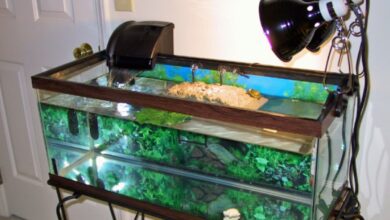
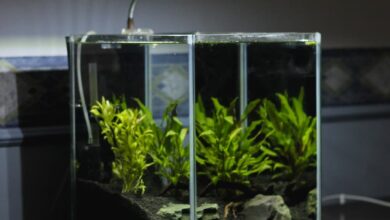
How To Set Up An Axolotl Tank
It is not difficult to set up a tank of 30 gallons. The main difference is in how you design and decorate the interior.
Check your list before you do anything. Make sure all your equipment will fit in a 30 gallon tank, and also that it meets the needs of your fish. After that, choose a suitable place to put the tank.
You need to lay down the substrate first. It is important to rinse it before laying the substrate.
Place the plants first, then cover their base with sand or gravel.
Once the substrate, plants, and decorations are all in place, add the rocks and driftwood.
Be sure to keep a good balance between the number of decorations and the free space.
You can then start to fill the tank up with water. It may be necessary to add water chemicals, such as salt or purifiers. Depending on the type you’re creating.
The tank will cycle in approximately 4 to 6 weeks. You will see the ammonia levels and nitrites peaking, then dropping to zero. Once they reach zero, it is safe to introduce fish.
Do not put the fish straight in the tank after taking them out of the water. This can stress them.
Instead, float them in the bag that they came in for 10 to 15 minutes. Add a cup of fresh water every five minutes, until the bag is filled.
Use a net to transfer the fish from the bag into the tank.
30 Gallon Tank Maintenance
Regular maintenance is key to keeping the aquarium environment safe. Regular aquarium maintenance is essential to keep and the environment around it safe. A common problem for aquarium owners who are new is that they don’t know what type of maintenance should be performed when. Although experts may differ on specifics of aquarium care, they all agree that any regular maintenance is preferable to none at all. Here is a recommended plan for aquarium maintenance.
Why do you need to maintain your Tank?
Many aquarium owners neglect maintenance. They have a bottom-feeding axolotl that will pick up any debris. What else do we need? Others will say that the axolotl are fine because nobody cleans the oceans and rivers. Why clean your aquarium then? It’s a great question. Mother Nature does not sit around, and she cleans up the outdoors pretty well. Large bodies of water, such as lakes, rivers and oceans, have waves and currents that circulate the water. The rain adds more fresh water and the plants absorb carbon dioxide while producing oxygen. Water is also a diluting agent for harmful chemicals.
The amount of water contained in an aquarium is much smaller than that of a natural body of water. It is also a closed ecosystem, which makes it quite different to a natural habitat. You can’t make anything go in or out of the aquarium unless you are there to do it. If filters are not cleaned regularly, they will become clogged, and no longer function properly. In the meantime, waste is produced by axolotl, food that has not been eaten decays and harmful substances slowly accumulate. Regular maintenance will keep your aquarium clean. The axolotl will eventually become sick if the aquarium is not maintained.
Maintaining Your Tank
Cleaning every surface of the aquarium daily, or even on a weekly basis is not practical. It’s also not a good idea to clean the entire aquarium all at once. Cleaning colony-rich surfaces, like the filter or the substrate, in a staggered manner will minimize any impact on the beneficial bacteria. It is important to not disturb the bacteria too much as this can cause the nitrogen cycle to be disrupted, resulting in an increase of ammonia, nitrite, and 2.
Daily Checks
Check the water temperature to make sure it’s within the proper range. Make sure the temperature of the aquarium is within the recommended range. Check the health of each axolotl by counting them. This is a good time, when they are out of the tank and easily visible. Examine the aquarium to determine if any uneaten food remains on the bottom. You can reduce the amount of food that you feed your axolotl if you see uneaten food after 5 to 10 mins. If you see uneaten axolotl food accumulating on the bottom, remove it with a gravel vacuum or siphon. When the level of water drops, you can top up with treated water.
If you don’t already have one, now is the time to get started. It is not necessary to keep a daily log of everything that happens, but it’s helpful to make note of anything unusual. You can then catch any trends. If the temperature drops by one degree, it’s not a big deal. But if that happens four times in a week, then something is wrong. This can all be accomplished in a few minutes.
- Counting and observing the axolotl
- Visual equipment check
- Temperature check
- Remove uneaten food
- Fill the reservoir to the top
- Notify concerns using a logbook or journal
Buyer’s Guide
The price range for the 30-gallon tank is reasonable, with models starting as low as $150-$200. More expensive models can cost up to $1500.
It should be easy to find a tank in this size, either online or at a store.
Compare the prices and choose which tank best meets your needs. Check the quality of the tank’s assembly and make sure that it is well sealed on all sides.
Look for scratches and other physical signs of damage to the walls or bottom.
Online shopping is convenient, but the ability to see the tank in person has a lot of advantages.
Conclusion
The 30-gallon tank provides you with more room to experiment.
Have you thought about aquascaping before? Beginners can take advantage of this opportunity to learn new things and expand their knowledge.
The aquarium is not too big, but it allows you to experiment and try out different setups. A 30-gallon aquarium is a great investment, especially when combined with beautiful fish.
This could be the tank you’ve been looking for.
What is your favourite 30-gallon set-up? Maybe thinking something smaller? Read our guide on the Best 20 Gallon Aquarium Tank Setup.
Keep Reading on Turtle Times
Got a question we haven’t answered?
The Turtle Times team answers reader questions every week. Drop us a note — Linda covers health, Priya handles softshells and side-necks, Tom takes aquatic species, Marcus covers tortoises, Jenna runs new-owner triage.