
Turtles, like many other pets, require a specific tank temperature to keep their body temperature stable. It is necessary for them because it helps in digestion, breathing, and disease resistance.
Turtles, unlike humans, cannot adjust their body temperature internally. It is your responsibility to keep your body temperature stable by maintaining your surroundings. As a result, you must do everything you can to keep the tank at the proper temperature.
It might cause respiratory problems if the water in your turtle aquarium is freezing. Because your turtle will be less likely to maintain activity and swim around, it might develop into obesity.
In the same way, overly hot water can cause illnesses in pet turtles. For a healthy turtle, it is necessary to ensure the water temperature is within a few degrees of the desired temperature.
How to Maintain a Turtle Tank Temperature
By maintaining a consistent temperature in the tank, you can keep your turtle healthy.
- Temperature Control Of The Basking Area
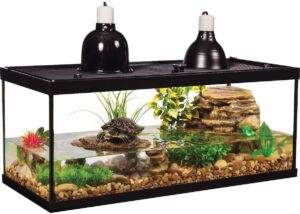
In the turtle tank, the temperature of the basking area must be carefully monitored and maintained. The interior temperature of an electric heat lamp with UVB light can get too hot, and turtles will avoid visiting there because they will fear getting too hot or having their skin dry up.
To help turtles survive, it’s critical to control the temperature of their environment. If the temperature inside is too cold, it might cause respiratory illness, which is terrible for turtles. Ensure that the basking area temperature is controlled by habitat lighting.
- Find The Appropriate Water Temperature
Species determine the ideal temperature for a turtle. It’s also important to note that turtles under the age of one need slightly warmer temperatures. This indicates that the temperature should be about 5°F higher than the recommended target in most situations.
Sick turtles require greater temperatures than healthy turtles. Turtles are ectothermic creatures that are susceptible to respiratory diseases. Raising the temperature of the environment can help in the battle against germs and respiratory diseases. Make sure to raise the water and air temperature of a sick turtle’s tank to 4 degrees over its average temperature.
- Regulate The Water Temperature
Maintain the water temperature in a turtle tank with aquarium heaters. Because most turtle tank heaters are built for fish tanks, make sure you choose the correct one. A protective covering should be applied to the heater’s exterior layer, which should be made of thermal-resistant plastic.
The power of your heating source should be sufficient to heat the water in the tank. If the turtle tank is kept cold, the most powerful heaters are required. You may utilize the less powerful ones in hotter climates. If you live in a cold region where the power goes out frequently, you should constantly check your tank. Even a few hours without a heater can be deadly to a turtle.
To help turtles survive, it’s essential to keep the turtle tank temperature constant. It is possible to extend the life of a heater by using multiple heaters. It’s usually a good idea to have two heaters because you can use one if one stops working.
Got a question we haven’t answered?
The Turtle Times team answers reader questions every week. Drop us a note — Linda covers health, Priya handles softshells and side-necks, Tom takes aquatic species, Marcus covers tortoises, Jenna runs new-owner triage.