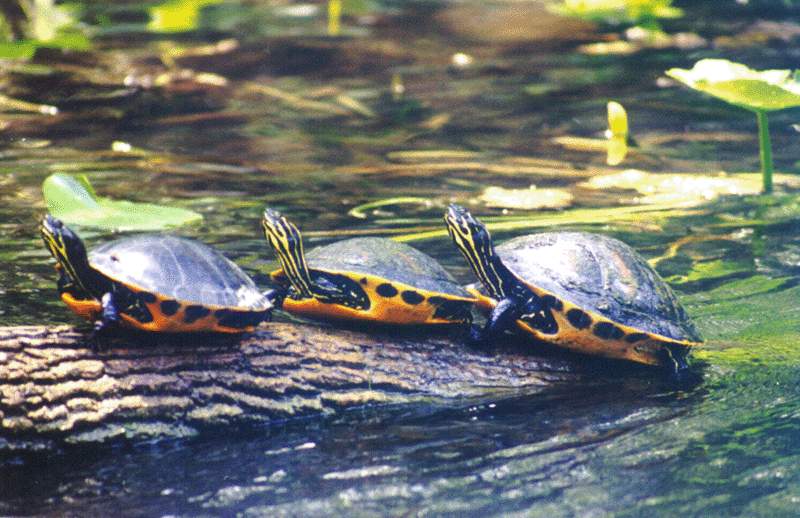
Wood turtles (Glyptemys insculpta) are one of the most distinctive species in the trade — sculpted, almost geological-looking shells with deeply-etched scute patterns, orange-red limb markings, and a personality that’s closer to a small tortoise than an aquatic turtle. Marcus has kept a pair of captive-bred wood turtles in an outdoor pen for twelve years and considers them his favourite species in the collection.
This guide is for keepers ready to commit to a long-lived, intelligent species that needs significantly more space and more varied environments than the standard slider tank can provide.
Species overview
Wood turtles are semi-aquatic North American natives, found in slow rivers, streams and surrounding woodlands of the north-eastern US and adjacent Canada. They spend more time on land than in water during the active season — closer to a box turtle in habit than a slider — but require stream-style water access for drinking, soaking and over-winter brumation.
Adult size:
- Both sexes: 16–25 cm of shell length. Males slightly larger and with concave plastrons for mating.
- Weight: 600 g to 1.3 kg.
The IUCN lists Glyptemys insculpta as Endangered. Wild populations have collapsed across much of the historic range due to road mortality, illegal collection and habitat fragmentation. The captive trade is small and tightly regulated; legitimately captive-bred animals come with paperwork.
Enclosure — aquatic part and terrestrial part
This is the species-defining setup point: wood turtles need both a water area and a substantial land area. A pure aquatic tank won’t do.
Our recommended setup is an outdoor pen for warmer months and a converted greenhouse or large indoor floor pen for winter:
- Water portion: 30–40 cm deep, with a sloping ramp at one end allowing easy entry and exit.
- Land portion: 4–8× the water surface area. Wood turtles spend most of their active time on land foraging.
- Land substrate: mixed natural materials — leaf litter over loam soil over pea-gravel base, planted with grasses and weeds.
- Hiding spots: hollow logs, dense plant clumps, rock overhangs. Wood turtles use multiple hides through the day.
- Basking spots: exposed logs or flat rocks where they can warm up after morning emergence.
Minimum enclosure footprint for an adult pair: 4×3 m for outdoor pen, 2×1.5 m for an indoor enclosure. Smaller setups produce stressed, inactive animals.
Indoor housing — only as a last resort
If outdoor housing isn’t possible, a wood turtle indoor enclosure needs to be substantial. A standard aquatic tank won’t work. The minimum:
- 2 m by 1 m floor footprint, ideally larger.
- Water section — a low plastic tub sunk into the substrate, 40 cm long × 30 cm wide × 20 cm deep, with submersible filter and easy exit ramp.
- Land section — 75–80 % of the floor, planted, with multiple hiding spots.
- Heating — basking lamp over a flat rock, ambient room temperature 18–22 °C.
- UVB tube spanning the basking area, replaced annually.
This is genuinely difficult to set up in a typical home. We strongly recommend outdoor housing for keepers serious about the species.
Water parameters
- Temperature: 18–22 °C. Cool water; wood turtles overheat in tropical setups.
- Filtration: for indoor tubs, a small canister or submersible filter rated 2× water volume.
- Flow: wood turtles in the wild live in moving streams. A slight current via a return-pump baffle is appreciated but not strictly required.
- Water changes: 25 % weekly for indoor setups; less frequent for outdoor ponds with biological filtration.
Basking
Wood turtles bask less than aquatic turtles but more than box turtles — somewhere in the middle. They’ll thermoregulate by moving between sun and shade across the enclosure.
- Basking spot temperature: 28–32 °C.
- UVB: reptile-grade 5.0 tube within 25 cm of the basking spot. Outdoor enclosures use natural sunlight (better).
- Photoperiod: follow natural seasonal light cycles where possible.
Diet
Wood turtles are omnivores with substantial plant component. They’re hunters on land (a wood turtle stomping its front feet on damp ground to bring earthworms to the surface is one of the most interesting behaviours in the species) and opportunists by water.
- Hatchlings (daily): chopped earthworm, bloodworms, soft-soaked pellets, small soft greens.
- Juveniles (every other day): earthworms, snails, slugs, gut-loaded crickets, mussel, leafy greens, fruit pieces.
- Adults (every 2–3 days): 50 % animal protein — nightcrawlers, snails, slugs, mussel, the occasional pinky mouse. 30 % leafy greens. 20 % fruit and berries.
The fruit ratio is higher than for aquatic turtles. Strawberries, blueberries, melon, mushrooms, banana, mango — all welcomed.
Calcium dust twice a week. Multivitamin with retinol vitamin A weekly. Cuttlebone in the enclosure as a free-choice option. Outdoor wood turtles supplement diet with wild prey — usually all the calcium and varied nutrition they need.
The worm-stomping behaviour
One species-specific behaviour worth flagging: wood turtles drum their feet on damp soil to mimic the vibration of rain, which triggers earthworms to surface. The turtle then picks off the worms as they emerge. You can watch it for hours.
This is one of several behaviours that has earned wood turtles a reputation for relative intelligence — they show problem-solving behaviour in feeding studies and recognise individual keepers. Whether “intelligent” is the right word for a reptile is debatable, but they’re measurably more responsive than most species we keep.
Brumation
Wood turtles brumate underwater through winter across their entire wild range. This isn’t optional — the species relies on cool-season inactivity for reproductive cycling, and indoor specimens kept at constant warm temperatures often develop fertility and metabolic issues over years.
Outdoor pen keepers in temperate climates let them brumate naturally. Indoor keepers should provide a 12–16 week cool period (water 5–10 °C, no feeding) once a year in winter. The protocol is more involved than for sliders and we’d point you at the British Chelonia Group for the full guide.
Lifespan
Captive wood turtles regularly live 40–60 years; wild specimens have been documented past 70. One of the longer-lived freshwater turtle species in captivity. Genuine multi-generational commitment.
Legal status
Wood turtles are listed as Endangered globally (IUCN). In the US, they’re protected to varying degrees in every state where they occur — some states allow legitimate captive-bred keeping with permits, others ban possession entirely. Check your specific state.
In the EU and UK, wood turtles aren’t on the invasive-species list and can be kept legally with CITES Article 10 paperwork. The species is included in CITES Appendix II for international trade.
Never accept a wood turtle without provenance paperwork. Wild-caught animals are illegal in most jurisdictions and represent direct conservation harm.
Buying advice
- Captive-bred only, with paperwork. Hatchling prices US$500–1,500 reflecting endangered status and breeding difficulty.
- Buy from established specialist breeders. Generic reptile shops rarely carry legitimately-traced wood turtles.
- Confirm provenance. Reputable breeders provide full lineage records.
- Don’t rescue from roadside. A wood turtle found wandering in a residential area in the US is almost certainly a wild animal moving between habitats. The right action is to move it across the road in the direction it was heading; never take it home.
Related on Turtle Times
- Wood Turtle species overview — natural history and identification.
- Care Sheets & Information — enclosure hub.
- Turtle Health & Feeding Guide — diet and medical companion.
- Box Turtle Diet Guide — closest dietary analogue in the trade.
- Turtle & Tortoise Care Index — master husbandry hub.
— Marcus, Turtle Times. Considering a wood turtle or have one and want feedback on the outdoor pen layout? The contact form reaches my inbox — flag “wood turtle” in the subject.
Got a question we haven’t answered?
The Turtle Times team answers reader questions every week. Drop us a note — Linda covers health, Priya handles softshells and side-necks, Tom takes aquatic species, Marcus covers tortoises, Jenna runs new-owner triage.