Outdoor Turtle Pond Construction: Complete Build Guide

An outdoor turtle pond is the single biggest welfare improvement a keeper can make for any aquatic species — better than any indoor tank, regardless of budget. Tom built his current 2,500-litre cooter pond in 2019 and learned every mistake the hard way: undersized, under-shaded, under-fenced, under-filtered. This is the guide he wishes someone had given him at the start.
Outdoor ponds work for any aquatic turtle species in climates that don’t freeze solid through winter. Sliders, painteds, cooters, maps, musks, mud and Reeves turtles all thrive outdoors when the setup is right.
Climate and feasibility
Before building, check the climate match:
- Year-round outdoor housing works for hardy species (sliders, painteds, snappers, Reeves, musks, mud) in climates where winter water doesn’t fully freeze and where summer water doesn’t exceed 28 °C consistently. Most temperate climates qualify.
- Seasonal outdoor housing (spring through autumn) works in cooler climates where you bring animals indoors for winter. UK summers are perfectly adequate for sliders and similar species.
- Avoid outdoor housing if your climate has prolonged sub-zero winters without insulated cover, or if summer water temperatures consistently exceed 30 °C.
Pond size — how big actually matters
The single biggest mistake new builders make: undersized ponds. A pond that’s “big enough” on day one becomes inadequate as the turtle grows and as you add filtration, plants and basking structures.
Minimum sizes per species:
- Single adult slider, painted, map, cooter: 3,000 litres / 800 US gallons. Surface area 4×3 m, depth 80–100 cm.
- Pair or small group: 6,000+ litres. Surface area 5×4 m, depth 100 cm.
- Adult snapping turtle: 8,000+ litres. Surface area 5×5 m, depth 100 cm.
- Small species (musks, mud, Reeves): 1,000–1,500 litres. Surface area 2×1.5 m, depth 60–80 cm.
- Adult Florida softshell or large female sideneck: 6,000+ litres, sandy bottom required.
Depth matters for two reasons: deep water stays cooler in summer, and (for hardy species) a depth of 1 m+ allows safe brumation through winter in temperate climates.
Pond construction — the practical sequence
1. Liner vs preformed
Two main options:
- EPDM rubber liner (our recommendation for most builds) — flexible, durable, lasts 30+ years. Buy oversized; you’ll trim excess. Cost £5–10 per m².
- Preformed plastic pond shells — cheaper and faster to install but constrained to manufacturer’s shape. Best for smaller ponds under 1,000 litres.
- Concrete — longest-lasting but expensive and harder to modify. Worth considering for permanent installations.
2. Excavation
Dig 20 cm bigger than the planned pond dimensions to allow for an underlay layer and liner thickness. Slope the sides at no more than 30° in at least one section to provide easy ramp access for the turtle. Have a shallow shelf (20–30 cm deep) running along one side — useful for basking-platform anchoring and for planted-margins.
3. Underlay
Lay geotextile pond underlay across the excavation before the liner goes in. This protects the EPDM from sharp stones and tree roots. Skip this and you get a leak within five years.
4. Liner installation
Drape the EPDM liner across the underlay loosely — don’t pull tight. Fill water slowly, allowing the weight to settle the liner into the contours of the excavation. Trim the excess only when the pond is full; cut to leave 30 cm of overhang on all sides for anchoring.
5. Edge treatment
Bury the overhang under flat rocks or paving stones around the perimeter. This anchors the liner and hides the visible edge. Add a small sloping ramp section made from sand-and-pebble fill where the turtle can climb out.
Filtration
Pond filtration is more forgiving than aquarium filtration because the larger water volume buffers parameter swings. But turtles produce substantial waste and you still need real capacity:
- Filter rating: 1× the pond volume per hour, minimum. For a 3,000-litre pond, that’s 3,000 lph filter throughput.
- Filter type: external pressurised pond filter with UV clarifier built-in. Brands like Oase, Pondxpert, Bermuda all work.
- UV clarifier: kills suspended algae and reduces green-water episodes. Essential for clear water in summer.
- Pump placement: pump on one side, return on the opposite side, to create water flow across the pond.
Biological filtration develops naturally in established ponds over 6–8 weeks. Don’t introduce turtles until the cycle is established — ammonia and nitrite tests should both read zero.
Basking platform
The single most-used feature of an outdoor pond. Build for the species:
- Sloping log or rock pile — the natural option. Position so afternoon sun hits it for 4–6 hours.
- Floating dock — commercial pond basking platforms or DIY from polystyrene + decking. Useful where the pond edges are too steep for natural access.
- Half-submerged paving stone — cheapest and most durable for smaller ponds.
The platform must allow the turtle to climb fully out of the water and dry off completely. Partial-haul-out doesn’t work for shell health.
Predator-proofing — the non-negotiable bit
This is where most outdoor-pond losses happen. Predators that’ll take turtles or eggs:
- Foxes, raccoons, badgers — will dig under fences and reach into shallow water.
- Herons, gulls, large corvids — take hatchlings and small adults from the water surface.
- Dogs (yours or neighbours’) — dig into ponds out of curiosity.
- Foxes again — they’re the main predator across most temperate climates.
The protection that actually works:
- Mesh roof over the pond — heavy-gauge welded wire mesh, supported on a wooden frame, anchored at all edges. Foxes can lift loose wire; secure it. This is the single most important piece of protection.
- Buried perimeter fence — 30 cm fence buried 20 cm into the ground around the entire pond area. Prevents digging-in attacks.
- No overhanging branches — predators climb. Cut back anything within jump range of the pond.
- Hiding spots in the water — turtles need underwater cover (driftwood overhangs, dense plant clumps, terracotta pipe) to escape aerial predators.
Planting and aquascape
Outdoor ponds benefit hugely from live plants:
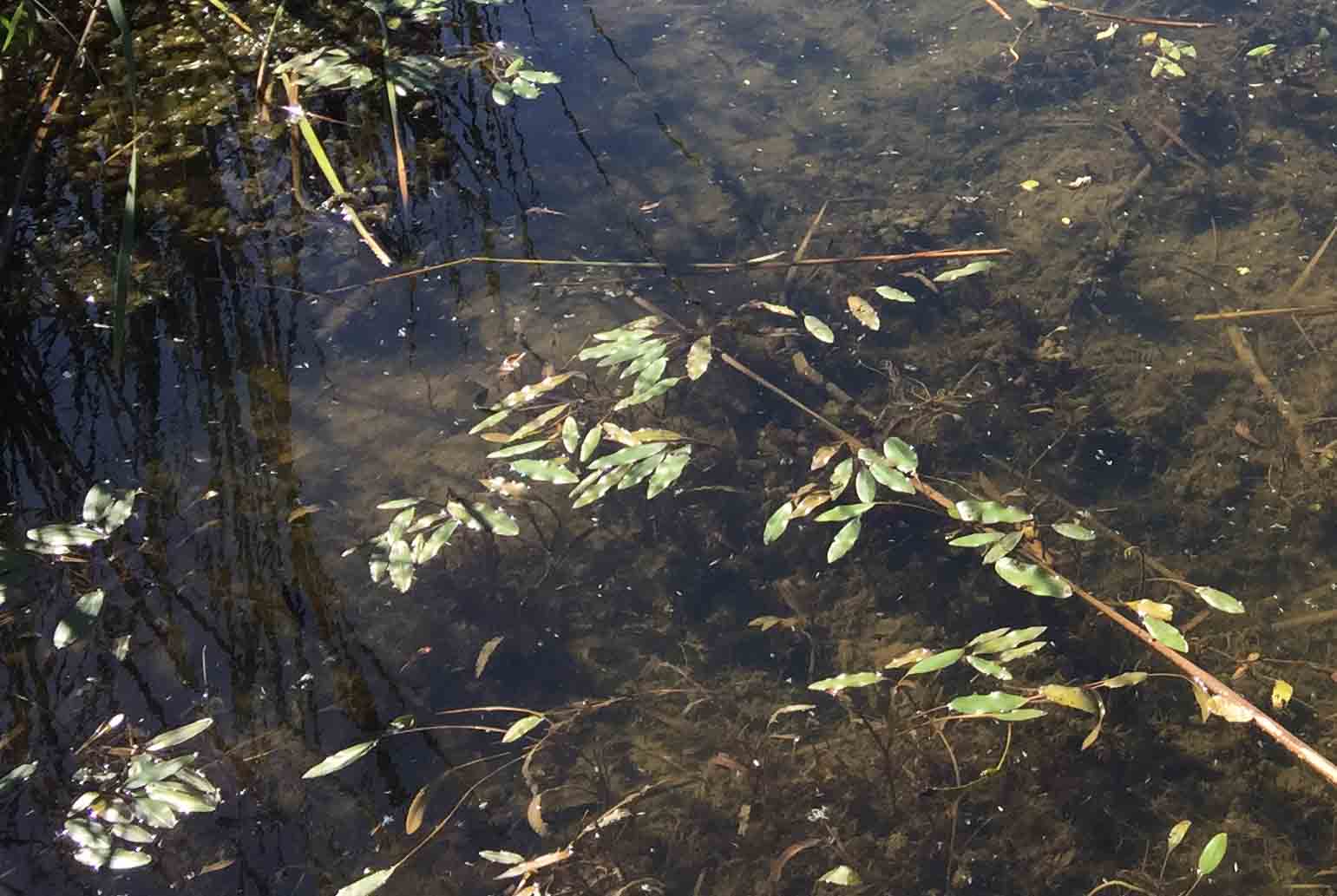
- Submerged oxygenators — anacharis, hornwort, eelgrass. Improve water quality and provide turtle grazing.
- Surface plants — water lily, water hawthorn. Provide shade and reduce algae.
- Floating plants — duckweed, water lettuce. Cooters and sliders eat them. Watch for over-coverage.
- Marginal plants — planted in the shallow shelf around the edges. Iris, marsh marigold, sedges. Predator cover for hatchlings.
Avoid: lilies in small ponds where they’ll be uprooted, water hyacinth (invasive in many regions), aggressive species that’ll choke filtration.
Winter preparation in temperate climates
Hardy species (sliders, painteds, snappers, Reeves, musks, mud) brumate underwater. The setup:
- Pond depth 80–100 cm — deep enough that the bottom stays above freezing.
- Pond heater or de-icer — keeps a small surface area ice-free for gas exchange. Critical — turtles can drown under unbroken ice over winter.
- Stop feeding when water drops below 15 °C consistently. The turtles aren’t digesting at that point.
- Net the pond against fallen leaves in autumn — decomposing leaves produce gases that displace oxygen.
- Remove tropical or sensitive species indoors for winter — red-foots, sulcatas, softshells, sidenecks, mata mata.
Cost estimate
For a 3,000-litre pond with proper everything:
- Excavation (DIY): free / contractor £500–1,000.
- EPDM liner + underlay: £150–250.
- Edge stones / paving: £100–200.
- Pond filter + pump + UV: £200–400.
- Mesh roof + framework: £200–400.
- Basking structure: £50–100.
- Plants: £50–100.
- Winter heater/de-icer: £30–60.
Total: roughly £800–1,500 DIY for a quality build. Cheaper than the annual running cost of a comparable-volume indoor tank over 5 years.
Related on Turtle Times
- Care Sheets & Information — enclosure hub.
- Turtle & Tortoise Care Index — master husbandry hub.
- Red-eared Slider Tank Setup — the indoor companion.
- Cooter Tank Setup — species especially suited to outdoor housing.
- Basking Area Setup — basking principles that transfer to outdoor builds.
— Tom, Turtle Times. Building a pond and want feedback on plans, or troubleshooting an existing build? The contact form reaches my inbox — flag “outdoor pond” in the subject.
Got a question we haven’t answered?
The Turtle Times team answers reader questions every week. Drop us a note — Linda covers health, Priya handles softshells and side-necks, Tom takes aquatic species, Marcus covers tortoises, Jenna runs new-owner triage.