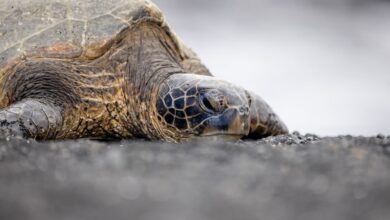
“Which turtle should I get?” is the question Jenna answers most often. New keepers usually arrive at the question after seeing a hatchling in a pet shop, falling for the look, and then realising they have no idea what the adult version will need. This guide is the honest framework we use to match keepers to species, written before you buy.
Most importantly: there’s no single “best beginner turtle.” The best species depends on your space, climate, budget, and how much daily interaction you want. Work through this guide and you’ll land on three or four candidates that genuinely fit your situation.
Step 1 — what space do you have?
Small flat or limited indoor space (under 200 litres tank realistic)
Best choices:
- Common musk turtle — stays under 12 cm shell, 75–100 litre tank works for life. See our musk turtle tank setup guide.
- Mud turtle (Eastern or Striped) — similar size profile to musk. Mud turtle care guide.
- Russian tortoise — smallest of the Testudo species, needs indoor enclosure but manageable. Russian tortoise guide.
Avoid: sliders, cooters, snapping turtles, sulcatas, Florida softshells, alligator snappers, large female maps. Any of these will outgrow a small-flat setup within 2–4 years.
Average house with outdoor garden access
Best choices:
- Hermann’s tortoise — thrives in outdoor pen, manageable adult size. Hermann’s tortoise guide.
- Painted turtle — medium-sized aquatic species, ideal for indoor 280-litre tank or outdoor pond. Painted turtle overview.
- Greek tortoise — similar to Hermann’s; check subspecies suits your climate. Greek tortoise guide.
- Reeves turtle — great UK/Europe choice given the EU restrictions on sliders. Reeves turtle guide.
- Spotted turtle — small but beautiful; group of 2-3 in a 200-litre setup. Spotted turtle guide.
House with large garden in warm climate
Best choices: any of the above plus:
- Red-eared slider (US/non-EU only; EU has invasive-species restrictions) — outdoor pond is ideal. Slider overview.
- Cooter turtle — needs the larger outdoor space adults reach. Cooter tank setup.
- Red-foot tortoise — for warm humid climates only. Red-foot guide.
Substantial outdoor space in hot dry climate
Best choices: any of the above, plus Sulcata if — and only if — you accept the 50-year, 80kg commitment. See our Sulcata reality-check guide.
Step 2 — what climate do you live in?
Climate match matters more than most pet shops admit. Rough guidance:
- Temperate (UK, northern Europe, northern US, Canada): Mediterranean tortoises (Hermann’s, Russian, Greek), hardy aquatic turtles (sliders, painteds, cooters, snappers, Reeves, musks, mud), Eastern box turtles. All can be kept outdoors in summer and brumated through winter.
- Sub-tropical (southern US, Mediterranean Europe, Australia): any of the above plus red-foot, yellow-foot, larger softshells.
- Tropical / hot-dry (desert south-west US, parts of Australia, southern Africa): Sulcata, Aldabra, Indian Star — species evolved for warmth.
- Tropical / hot-humid (Florida, southern Mexico, parts of South-East Asia): red-foot, yellow-foot, mata mata, sidenecks, Florida softshell.
Step 3 — aquatic or terrestrial?
Aquatic species pros
- Spectacular to watch — swimming, hunting, basking.
- Often the “classic turtle” choice families expect.
- Many species available; established care information.
Aquatic species cons
- Substantial water-quality maintenance.
- Heavy filtration costs.
- Can’t handle the turtle without significant stress.
Terrestrial (tortoise) pros
- Closer to a “walking pet” experience.
- No filter, no water-quality testing.
- Outdoor pens easier to set up than ponds.
- Generally longer-lived than aquatic species.
Terrestrial cons
- Outdoor pen space requirements can be substantial.
- Brumation more involved than for aquatic species.
- Some species (Sulcata, Aldabra) become enormous.
Step 4 — how interactive do you want the pet?
Observation pets (most turtles)
The vast majority of turtle and tortoise species are observation pets. You watch them; you don’t handle them. Picking up most aquatic turtles causes stress; tortoises tolerate brief handling but it’s not their preference.
If you want an “observation only” pet: musk, mud, map, spotted, snake-neck, softshell, mata mata, sideneck. All beautiful, none want regular handling.
Semi-interactive species
A handful of species become accustomed to keepers, come for food, and tolerate observation at close range without stress:
- Sliders, cooters, painted turtles — in established setups, will approach the front of the tank for food.
- Hermann’s, Greek, Russian tortoises — recognise individual keepers and follow them around outdoor pens.
- Reeves turtles — particularly social; one of the most keeper-recognising species.
Genuinely interactive species
The most personality-rich choices:
- Red-foot tortoise — bold, curious, takes food from hand, recognises keepers. The most “dog-like” tortoise.
- Sulcata tortoise — characterful and responsive, but the size and care commitment is enormous.
- Box turtle (Eastern, Three-Toed) — intelligent, individual personalities.
Step 5 — how long will the pet live?
Honest answer: longer than you expect. Most turtles outlive dogs and cats by decades.
- Aquatic turtles: 25–50 years (sliders, painteds, musks, mud, cooters).
- Larger aquatic species: 50–70 years (snappers, large female sliders, Florida softshells).
- Mediterranean tortoises: 50–80 years.
- Sulcata, red-foot, yellow-foot: 50–80 years.
- Aldabra, Galapagos: 80–150+ years. Multi-generational ownership.
Plan succession. Put the tortoise in your will. We’re serious.
Species we don’t recommend for beginners
- Red-eared slider — common pet-shop choice but the lifetime commitment surprises new keepers. Banned in much of the EU as invasive. Consider a Reeves or painted instead.
- Sulcata tortoise — gets enormous. See our Sulcata reality check.
- Florida softshell — aggressive feeders, females reach 60 cm.
- Snapping turtles — not beginner-friendly. Snapping turtle guide.
- Mata mata — specialist; not beginner. Mata mata overview.
- Alligator snapping turtle — protected in most jurisdictions; requires permits.
- Aldabra or Galapagos tortoise — expensive, protected, and outlive you. Adoption-only if you’re serious.
Where to buy — ethical sources
- Captive-bred specialist breeders — the right starting point. Tortoise Trust (UK) and TortoiseGroup (US) maintain breeder lists.
- Reputable reptile shops with provenance info — not all are equal. Ask where the animals came from.
- Rescue organisations — adopting an adult skips the hatchling phase and supports rescue work. Highly recommended for Sulcatas, box turtles, sliders.
- Avoid: generic pet shops with hatchlings of unknown origin, anyone who can’t provide species-specific paperwork, sellers offering wild-caught animals.
See our guide to ethical turtle sources for more.
Cost reality check
Lifetime cost (purchase + setup + running) for typical species:
- Musk turtle — £1,500–3,000 lifetime.
- Painted/Reeves turtle — £2,000–5,000.
- Hermann’s tortoise — £2,500–6,000 (outdoor pen cheaper).
- Red-eared slider — £3,000–7,000 (large adult tank costs).
- Sulcata — £10,000–25,000+ over 50 years.
The initial £30 hatchling is the cheapest part.
Final recommendation framework
If we had to pick three “safe first turtles”:
- Small flat, observation pet: common musk turtle.
- House with garden, interactive: Hermann’s tortoise.
- House with garden, aquatic: painted turtle (or Reeves in the EU/UK).
All three are manageable, established, well-documented, and forgiving of the inevitable beginner mistakes.
Related on Turtle Times
- New Turtle Owners — pre-purchase checklist.
- Turtle & Tortoise Care Index — master husbandry hub.
- Turtle & Tortoise Breeds — full species index.
- Where to buy turtles ethically.
- All breed posts — species-by-species reference.
— Jenna, Turtle Times. Trying to decide between species or want a second opinion on a planned setup? Contact form — flag “which turtle” in the subject. We always reply to pre-purchase questions.
Got a question we haven’t answered?
The Turtle Times team answers reader questions every week. Drop us a note — Linda covers health, Priya handles softshells and side-necks, Tom takes aquatic species, Marcus covers tortoises, Jenna runs new-owner triage.